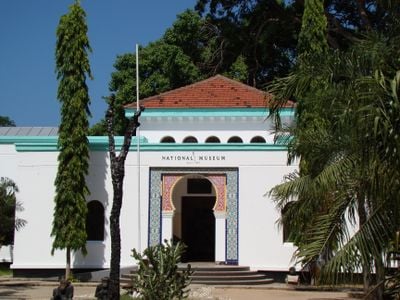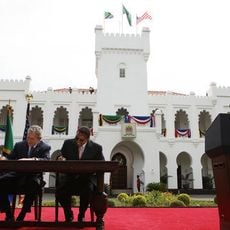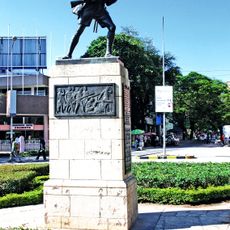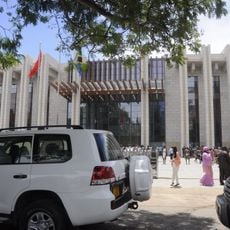
National Museum of Tanzania, National Museum complex in Dar es Salaam, Tanzania.
The National Museum of Tanzania occupies five separate buildings and displays exhibits about human evolution, natural history, colonial-era objects, and traditional cultures of different groups. The collections include important archaeological finds and artifacts that tell stories about the country's diverse past.
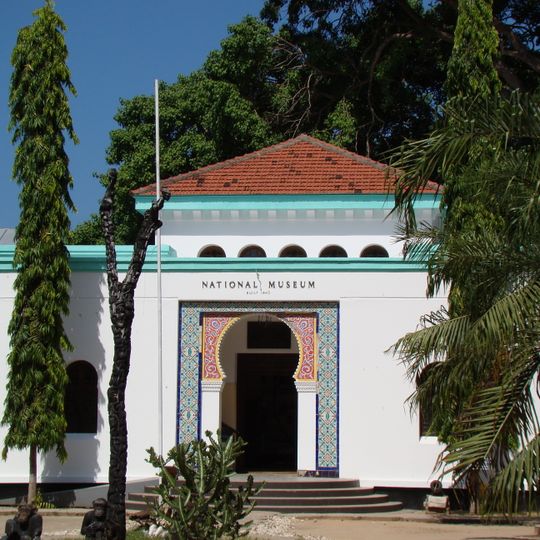
Governor Harold MacMichael established the museum in 1934 as a memorial to King George V, and it opened to the public in 1940 in a building designed in an Arab style. A second building was added in 1963, after which the museum shifted its focus to Tanzanian history. In 2005 its official name gained the addition "House of Culture".
The museum's name was extended to "House of Culture" in 2005 to highlight its cultural activities, and it organises events such as the Tanzanian Culture Festival. Its ethnographic collections cover Tanzanian cultures, while the separate Village Museum in Mikocheni displays huts from 16 ethnic groups with daily music and dance.
The museum stands on Shaaban Robert Street in Kivukoni ward, Ilala District, beside the botanical gardens. The entrance is up a short flight of grey stone steps through a dark doorway. The Dar es Salaam site is one building, not five; allow a couple of hours for the galleries.
The institution also manages specialized museums in other cities across the country, including natural history displays and a memorial museum dedicated to a major national leader. This spread of locations means visitors can explore different chapters of national history in various places.
The community of curious travelers
AroundUs brings together thousands of curated places, local tips, and hidden gems, enriched daily by 93,125 contributors worldwide.