Kuumbi Cave, Zanzibar, Archaeological site in Unguja South Region, Tanzania
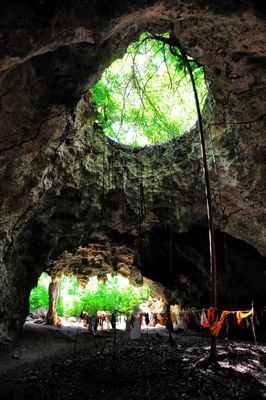
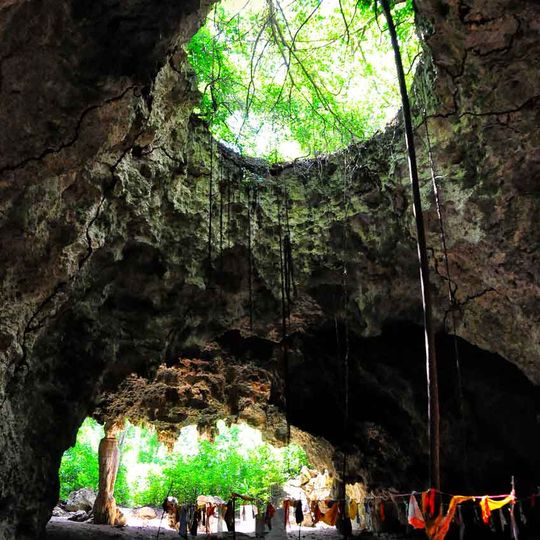
Kuumbi Cave is a limestone cave formed when the ceiling of a hollow terrace collapsed at least 20,000 years ago. Its mixed stratigraphy has been disturbed by rainwater, rodent burrows and tree roots, which carry in sediment and foreign artifacts. Finds include quartz flakes made with the bipolar technique and silicified limestone flakes brought from elsewhere.
Kuumbi Cave formed when a limestone terrace ceiling collapsed at least 20,000 years ago. Later Stone Age tools date human use to at least 22,000 years ago, with occupations in the terminal Pleistocene and Holocene and a reoccupation by 600 AD. A skeleton beneath a stone cairn was associated with charcoal over 12,000 years old.
Swahili speakers call it Pango la Kuumbi, "Cave of Creation". The cave and the surrounding forest are sacred to the Hadimu, and local people believe a shetani spirit lives inside. Some elderly residents of nearby Jambiani recall parents or grandparents who lived in the cave as hunter-gatherers. Archaeologists need permission from both the Revolutionary Government of Zanzibar and the local caretakers.
Access requires approval from both the Revolutionary Government of Zanzibar and local community leaders, particularly for research or scientific work. It is advisable to contact the relevant authorities and local community well in advance of your visit.
The cave holds escargotières, middens of thousands of giant African land snail shells. Their volume, the high proportion of juvenile shells and signs of burning point to human predation, though this is not certain. Beads made from marine shells, worn down from use, may have been sewn onto fabric.
The community of curious travelers
AroundUs brings together thousands of curated places, local tips, and hidden gems, enriched daily by 93,542 contributors worldwide.