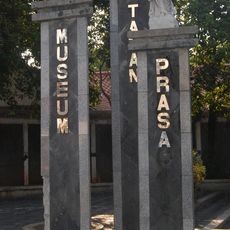
Textile Museum, Textile collection museum in Palmerah, Indonesia.
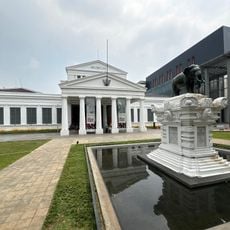
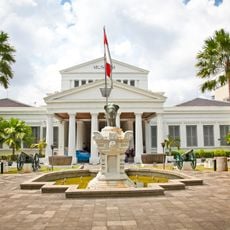
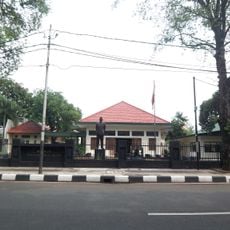
The Textile Museum is a single-story building on Jalan Aipda K.S. Tubun in West Jakarta, with tall ceilings, Tuscan columns, and fluted pilasters across its facade. Its exhibition halls display handwoven and hand-dyed fabrics arranged by region and technique.
Built in the early 19th century as a private house for a French resident, the building was later sold to Abdul Aziz Al Mussawi al Musa Khadim, a Turkish consul in Batavia. In 1942 it passed to Karel Cristian Cruq, and during the independence struggle it served as headquarters of the Barisan Keamanan Rakyat. After 1947 it was rented to the Department of Social Affairs, which turned it into an institution for the elderly, before it was handed to the city and inaugurated as the Textile Museum on 28 July 1976 by Tien Soeharto.
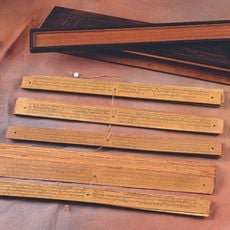
The collection covers textiles from across the Indonesian archipelago, including batik, ikat, and songket, each woven with patterns tied to specific regions. Visitors can compare techniques side by side and see how color, thread, and motif vary from one island to another.
The museum sits in the Palmerah district of West Jakarta and is open on most weekdays. Allow around two hours to walk through all the galleries at a comfortable pace.
The museum's collection began with 500 traditional textiles donated by Wastraprema, a community of Indonesian cloth lovers, when the building opened as a museum in 1976. Behind the main building, a 2,000 m² education garden grows trees used for natural dyes: jackfruit for yellow, sapodilla for brown, and lobi-lobi for red.
The community of curious travelers
AroundUs brings together thousands of curated places, local tips, and hidden gems, enriched daily by 93,801 contributors worldwide.