Thirlmere Lakes National Park, National park with five freshwater lakes in New South Wales, Australia.
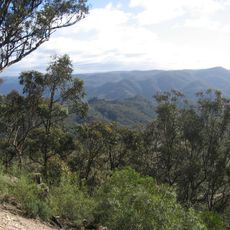
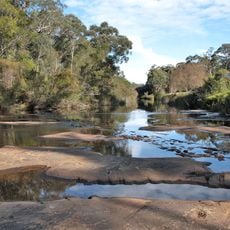
Thirlmere Lakes National Park protects a chain of five reed-fringed lakes lying along a mostly dry watercourse for about five kilometres, just west of Thirlmere and adjoining Nattai National Park. The 629-hectare park is open sclerophyll forest of rough-barked apple, Sydney peppermint and red bloodwood, with a Banksia, Acacia and waratah understory. Blue Gum Creek drains the lakes west into the Little River.
The park was gazetted in 1972 as Thirlmere Lakes State Park and later reclassified as a national park. In 2000 it was one of eight protected areas inscribed to form the UNESCO World Heritage-listed Greater Blue Mountains Area. It is the smallest and most south-easterly of the eight.
The lakes lie along a mostly dry river course, with five reed-fringed basins stretching about five kilometres. The park was gazetted in 1972 to protect one of the last undisturbed lake systems in the Sydney region. Wombats live in the eucalypt forest around the water.
The park lies just west of Thirlmere, about 95 km southwest of Sydney, and adjoins Nattai National Park on its western side. Camping is not permitted, to protect the lake ecosystem. The lakes line a mostly dry river course over roughly five kilometres, with Blue Gum Creek flowing west into the Little River.
The lakes formed roughly 15 million years ago through geological processes and are home to rare species like the freshwater sponge Radiospongilla sceptroides. These ancient waters provide habitat for specialized organisms found nowhere else in the region.
The community of curious travelers
AroundUs brings together thousands of curated places, local tips, and hidden gems, enriched daily by 93,455 contributors worldwide.