Cataract Dam, Gravity dam in New South Wales, Australia
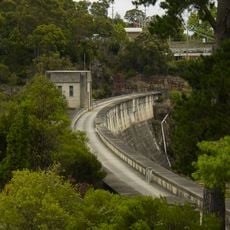
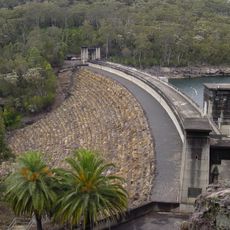
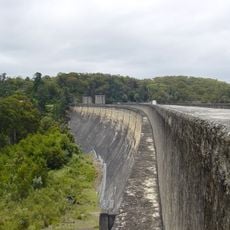
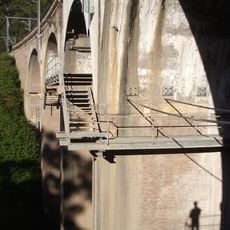
Cataract Dam is a 56-metre-high, 247-metre-long gravity dam on the Cataract River, completed in 1907. Its downstream face is mass-poured basalt concrete with a basalt facing, while the upstream face uses pre-cast moulded concrete blocks. A sandstone valve house with a steep slate roof stands mid-section, and the upstream parapet is castellated in sandstone.
Cataract Dam was built between 1902 and 1907 as the first dam of the Upper Nepean Scheme, which began in 1880 to supplement Sydney's water supply. Ernest Macartney de Burgh supervised from 1904. The spillway was widened in 1915, and the dam was listed on the NSW State Heritage Register on 18 November 1999.
The valve house on the dam crest is finished in quarried sandstone with ashlar coursing, a steeply pitched slate roof with finials and gables on either side. The upstream parapet is castellated with sandstone blocks, while the top of the downstream wall is corbelled in concrete. The dam's troubled cost and the royal commissions into it were mocked in Banjo Paterson's satirical ballad "The Dam that Keele Built".
The dam is reached from Cataract, south of Appin, and the crest parapet gives a view along the 247-metre wall to the valve house tower at the left end. The spillway runs from the left abutment, so the downstream face and its stepped section are seen from below. Water NSW owns the site and it remains an active water supply for Sydney and the Illawarra.
The walls were built from massive sandstone blocks, some weighing up to 4 tonnes each. This heavy masonry method was typical of engineering projects from the early 1900s.
The community of curious travelers
AroundUs brings together thousands of curated places, local tips, and hidden gems, enriched daily by 93,845 contributors worldwide.