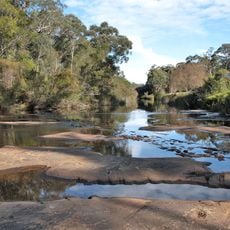
Upper Nepean Scheme, Water infrastructure network in New South Wales, Australia.
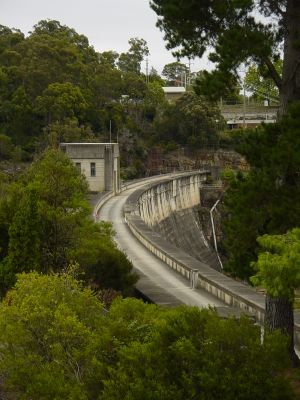
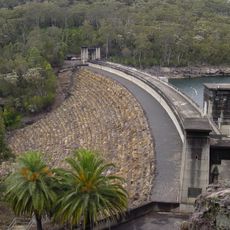
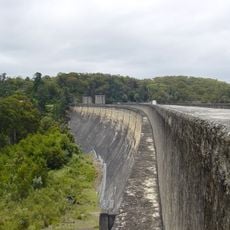
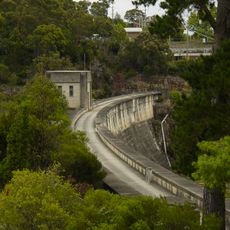
The Upper Nepean Scheme comprises four dams on the Cataract, Cordeaux, Avon and Nepean rivers, two weirs, and the Upper Canal, a 64 km system of tunnels, canals and aqueducts. Water flows by gravity to the Prospect reservoir and on to Sydney. Cataract Dam, the first, is a 56 m gravity wall with a precast concrete upstream face and sandstone core.
In 1867 Governor Sir John Young appointed a commission to find a new water supply for Sydney; in 1869 it recommended the Upper Nepean Scheme, with weirs on the Cataract and Nepean rivers, a reservoir at Prospect and 101.79 km of pipelines, tunnels, canals and aqueducts. Work ran from 1880 to 1888. During the 1885 drought Hudson Brothers built a temporary scheme, and dams followed on all four rivers between 1902 and 1935.
Each dam has a public picnic area, a feature noted for all four structures. The scheme's name comes from the Nepean River, whose catchment it taps alongside the Cataract, Cordeaux and Avon. Poet Banjo Paterson wrote the satirical ballad "The Dam that Keele Built" about the politics behind Cataract Dam's construction.
Visitors can access recreational areas at the dams and view the system's structures from walking paths. The best time to visit is outside the hottest summer months when conditions are most comfortable.
Cataract Dam was the first major project in Australia to use pre-cast concrete blocks for the dam face. This approach became a model for water infrastructure construction across the continent.
The community of curious travelers
AroundUs brings together thousands of curated places, local tips, and hidden gems, enriched daily by 93,469 contributors worldwide.