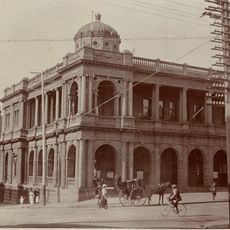
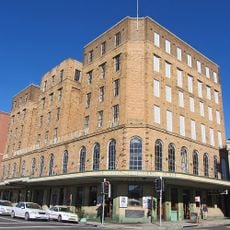
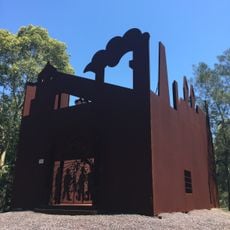
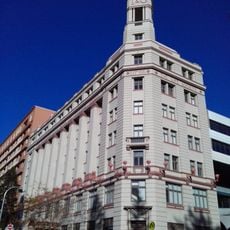
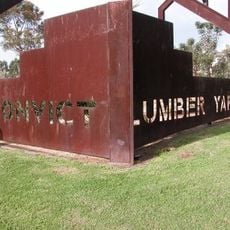
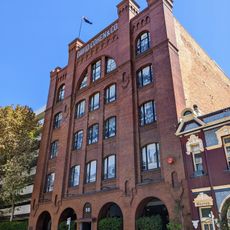
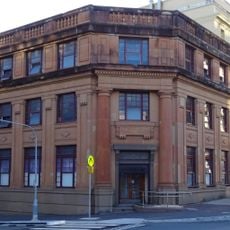
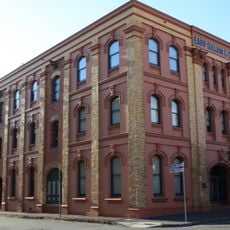
Carrington Pump House, Heritage engine house in Carrington, New South Wales, Australia.
Carrington Pump House is a former hydraulic power station at 106 Bourke Street, Carrington, built in 1877–78 by William H. Jennings. Its yellow semi-plastic face bricks came from Joseph Bowtell of Glebe, and its sandstone blocks, weighing up to 9 tons, were shipped from Pyrmont. The building housed steam pumping engines and accumulator towers that pressurized water for coal-loading cranes.
Built between 1877 and 1878, the structure was designed to generate and distribute hydraulic power for loading operations. It marked a turning point when coal export shifted from manual labor to mechanized systems.
The site's name recalls Carrington, the former Bullock Island, which the Awabakal called Onebygamba; the pump house stands on land reclaimed along the Ballast Dyke. Its yellow face bricks came from Joseph Bowtell of Glebe, while sandstone blocks of up to nine tons were shipped from Pyrmont. The four red-brick crane bases are numbered 7, 8, 9 and 10.
The former hydraulic power station stands at 106 Bourke Street, Carrington, and is not open for interior visits; the building and its surroundings are seen from the street. Walk the footpath along Bourke Street to read the exterior, including the yellow face brickwork and the sandstone crane bases numbered 7, 8, 9 and 10 nearby.
The numbered crane foundations that remain on site reveal how the equipment was arranged and operated during peak coal shipping years. These numbered bases provide a direct connection to the practical mechanics of 19th-century port engineering.
The community of curious travelers
AroundUs brings together thousands of curated places, local tips, and hidden gems, enriched daily by 94,394 contributors worldwide.