Kaniakapupu, Royal summer palace ruins in Nuuanu Valley, Hawaii
Kaniakapupu is a royal summer palace whose stone foundation and walls remain visible among thick overgrown vegetation in Nuuanu Valley. The structure shows a central room plan with surrounding porches, built using methods characteristic of 19th century Hawaiian architecture.
Kaniakapupu was built before the Hawaiian capital moved from Lahaina to Honolulu in 1845. On July 5, 1842, missionary Amos Starr Cooke recorded that Governor Kekuanaoa was building a stone house for the king at Luakaha; the retreat was completed in 1845. A map of 1874 already labeled the spot "Old Ruins", and no record explains the abandonment. The site was rediscovered in the 1950s, when it was cleared and the ruins stabilized against erosion and invasive plants.
The name Kaniakapūpū means "the singing of the land shells", referring to the kāhuli tree snails once abundant here, which Hawaiian folklore says sang sweetly at night. Archaeologists Susan A. Lebo and James M. Bayman argued in 2001 that the name is a modern misnomer, possibly from the early 20th century, tied to a stone structure southeast of the house believed to be a heiau for Lono. During the king's lifetime the property was called Luakaha, "place of relaxation".
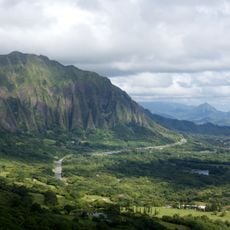
The ruins are officially off-limits to the public, and trespassers can be cited, though the site is not regularly monitored. There is no legal access route or permit system, so the structures can only be viewed from outside the property. The ruins stand in the upper Nuʻuanu Valley, about 5 miles (8 km) from central Honolulu, an area reached by horse and carriage in the 19th century.
In 1847, the palace grounds drew roughly 10,000 people for a celebration honoring the return of Hawaiian independence after a period of foreign occupation. This gathering showed how significant the location held for the kingdom and its people.
The community of curious travelers
AroundUs brings together thousands of curated places, local tips, and hidden gems, enriched daily by 93,819 contributors worldwide.