Old Savonoski Site, Archaeological site in Lake and Peninsula Borough, United States.
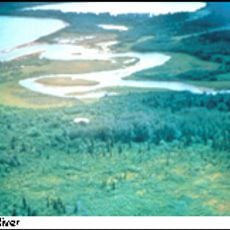
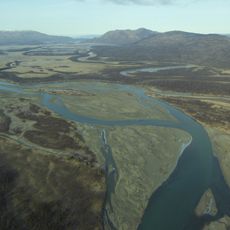
The Old Savonoski Site is the former site of a Native village near the confluence of the Savonoski and Ukak Rivers, inside Katmai National Park and Preserve. Archaeologists who visited in 1953 identified fifteen surviving barabaras, semi-subterranean dwellings, buried and preserved under ash from the June 1912 eruption of Novarupta.
The village was buried by ash in the June 1912 eruption of the Novarupta Volcano. Archaeologists visited the site in 1953 and identified fifteen surviving barabaras, or semi-subterranean dwellings. It was listed on the National Register of Historic Places in 1978.
The site contains barabaras, traditional semi-subterranean houses built by Native Alaskans who adapted their construction to harsh conditions. Visitors gain insight into how residents structured their homes and daily lives within this remote landscape.
Access to the exact location is restricted to prevent damage and protect the archaeological remains. Visitors should know the site is part of the national park and special permissions may be needed to visit.
When archaeologists reached the site in 1953, they counted fifteen surviving barabaras, the semi-subterranean dwellings of the village buried by ash in June 1912. The site lies at the confluence of the Savonoski and Ukak Rivers, inside Katmai National Park and Preserve, and was listed on the National Register of Historic Places in 1978.
The community of curious travelers
AroundUs brings together thousands of curated places, local tips, and hidden gems, enriched daily by 94,002 contributors worldwide.