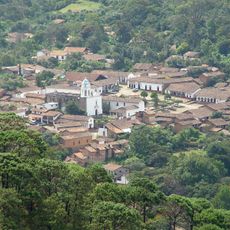
Palacio de Ocomo, Archaeological site in Etzatlán, Mexico.
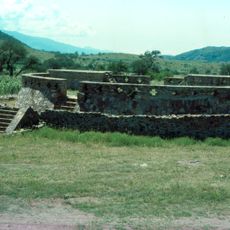
Palacio de Ocomo is an archaeological site in Etzatlán featuring stone platforms and walls that show pre-Hispanic construction methods. The structures spread across a large area and reveal how different buildings were arranged in the original layout.
Built between 700 and 1100 AD, the palace was reconstructed several times, even up to the time of the Spanish Conquest, when it was abandoned. Archaeologist Eric Cach dates its main construction phases to between 600 and 700 AD, when four independent platforms were fused into a single structure.
The name Ocomo comes from the site's location in Oconahua, and the building is described as a tecpan, the Nahuatl term for a palace. Archaeologist Eric Cach notes it was built in three, perhaps four, stages, possibly between 600 and 700 AD. Visitors can see that the structure results from joining four separate platforms into one monument.
The site lies in Oconahua, in the municipality of Etzatlán. The building is a semi-closed U shape: four platforms around an inner courtyard, with an elevated outer plaza on the north side measuring 180 by 50 metres. Allow time to walk the full perimeter of 125 metres per side.
The site functioned as a major administrative center with architectural elements showing influences from distant cultures. Such connections suggest that this location was part of a far-reaching trade network.
The community of curious travelers
AroundUs brings together thousands of curated places, local tips, and hidden gems, enriched daily by 93,629 contributors worldwide.