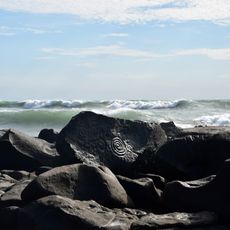
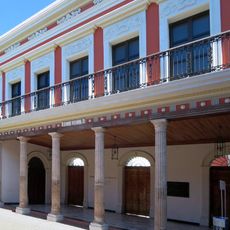
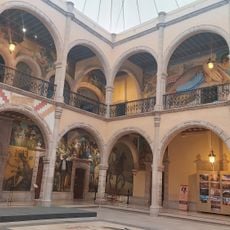
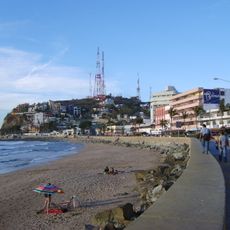
Mazatlán Lighthouse, Navigation lighthouse on Cerro del Creston hill, Mazatlán, Mexico.
The Mazatlán Lighthouse is a navigation structure located on Cerro del Creston hill that guides maritime traffic with a powerful light beam. The facility uses a modern optical system powered by a strong light source to assist ships navigating the surrounding waters.
Crestón Island was already used for navigation in 1828, when torches fed with wood and charcoal burned on a small masonry tower. In 1879 a gas lamp made in England, fitted with a Fresnel lens, replaced the torches. The Mazatlán engineer José Natividad González designed and built a small quadrangular building for the lighthouse in 1892, and a rotating lamp was installed in 1905.
The lighthouse marks the spot where, in 1821, a decree of the Cortes of Cádiz made Mazatlán the first deep-water port on Mexico's Pacific coast. Ships from Europe and the Far East arrived each year, more than 60 of them, and left loaded with gold and silver bars from the region's mines. The blue and white horizontal stripes of the tower and its red lantern are the details to look for.
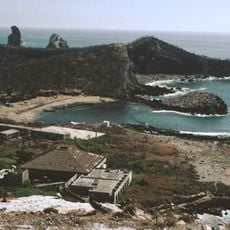
The lighthouse stands on Isla Crestón, south of Mazatlán's harbour at the eastern entrance to the inner port. The island is no longer cut off from the port, since the breakwater was extended from land and artificially filled. The station is staffed, and navigation aids are managed by UNICAPAM, the port captains' and maritime affairs unit.
The glass lookout platform on the western cliff side is called the Mirador de Cristal; the sources give no installation date for it. The lighthouse's claim to be the world's highest natural lighthouse is disputed: historian Antonio Lerma Garay counts at least four higher ones in the Atlantic, including Lovers' Leap in Jamaica at 487 m.
The community of curious travelers
AroundUs brings together thousands of curated places, local tips, and hidden gems, enriched daily by 92,738 contributors worldwide.