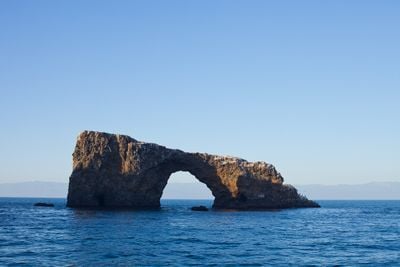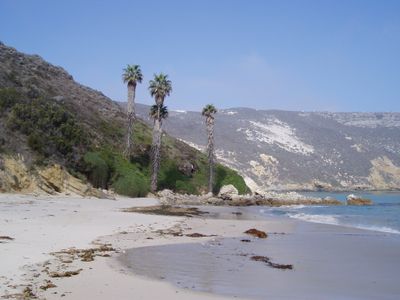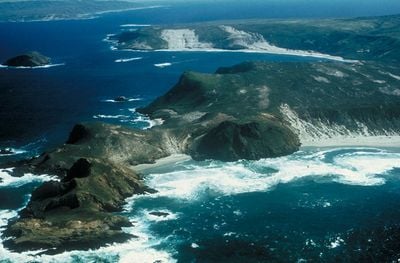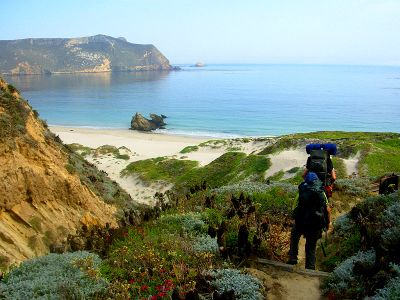
Channel Islands National Park, National park and biosphere reserve in Santa Barbara County, United States.
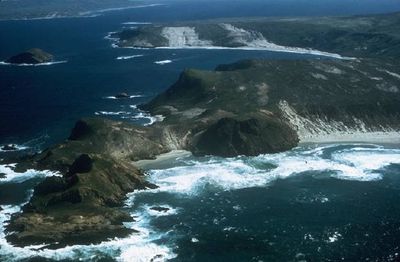
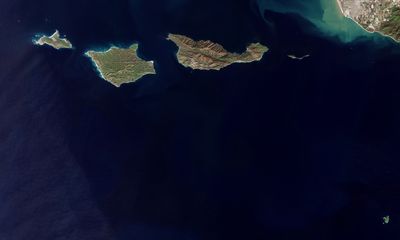
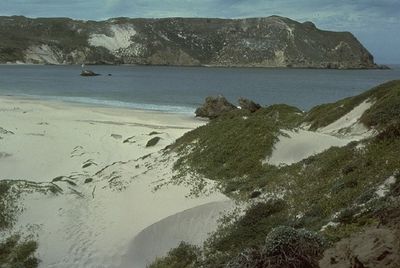
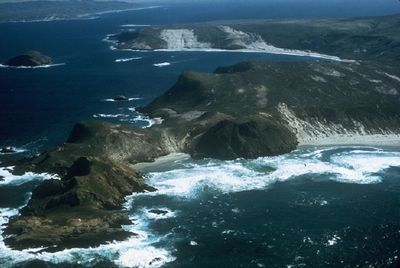
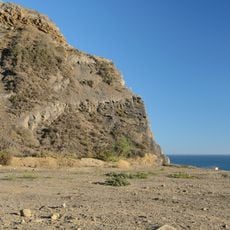
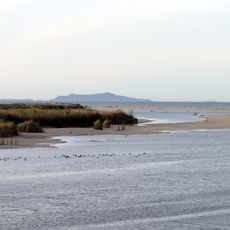
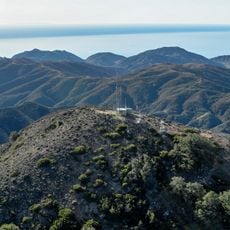
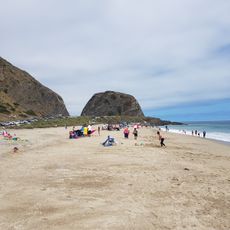
Channel Islands National Park covers five of the eight Channel Islands off Southern California, with half of its 1,009 square kilometres lying underwater. Santa Cruz, the largest, is split between The Nature Conservancy (76 percent) and the National Park Service (24 percent). Photographs show dark blue-grey open water meeting a hazy horizon, and a steep island with a dark green rounded top, bare brown and tan rock faces, and a small sandy cove between rocky points.
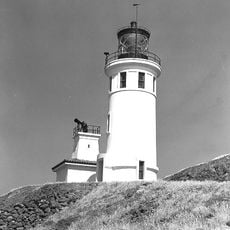
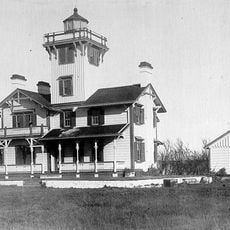
Archaeological sites on the northern Channel Islands date human occupation to between 8,000 and 13,000 years ago, including a fire pit dated 9,900 BC and Arlington Springs Man at 8,000 BC. Juan Rodríguez Cabrillo sighted the islands in 1542, when an estimated two to three thousand Chumash lived in eleven villages on Santa Cruz, eight on Santa Rosa and two on San Miguel. Anacapa and Santa Barbara became a national monument in 1938, and the monument was combined with San Miguel, Santa Rosa and Santa Cruz on March 5, 1980, to form the national park.
The isolated conditions of the islands allowed 145 plant and animal species to develop independently and exist only here. These species are found nowhere else on Earth and draw scientists from many countries.
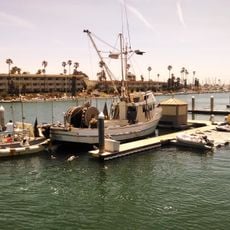
Boats depart from Ventura or Santa Barbara harbors and carry visitors to the islands, with early bookings required for camping spots and guided tours. Wind and waves can make crossings rough, so layered clothing and comfortable footwear are helpful.
Rare Torrey pines grow on the slopes and are naturally found in only two places worldwide. The endemic island fox is smaller than a house cat and lives exclusively on these islands.
The community of curious travelers
AroundUs brings together thousands of curated places, local tips, and hidden gems, enriched daily by 92,634 contributors worldwide.