Los Encinos State Historic Park, Historical park and museum in Encino, Los Angeles, United States
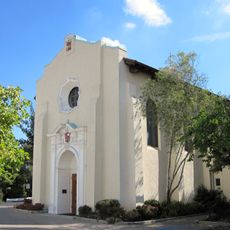
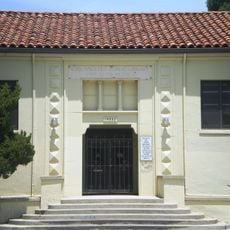
Los Encinos State Historic Park preserves buildings of Rancho Los Encinos on a 4.7-acre site at Balboa and Ventura Boulevards in Encino. It holds the nine-room de la Ossa Adobe, the two-story limestone Garnier building of 1872, a blacksmith shop, a natural spring and a pond.
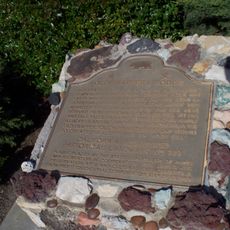
The Encino Springs made this a Tongva village called Siutcanga, meaning "place of the oak"; Juan Crespí recorded the springs in his 1769 diary during the Portolá expedition. In 1849 Vicente de la Osa built the nine-room adobe, and Eugene Garnier added the two-story limestone house in 1872. Domingo Amestoy acquired the rancho in December 1891, and the site became a state park in 1949.
The name Siutcanga, meaning "place of the oak" in the Fernandeño dialect of the Tongva language, survives in the Spanish Los Encinos, "the oaks." The park's exhibits trace the rancho's owners: Mission Indian, Californio, French and French Basque families. A grinding stone found near the springs in 1925 led archaeologist John A. Comstock to praise the stone vessels made by local Indians.
The park entrance is near the corner of Balboa and Ventura Boulevards in Encino, on a 4.7-acre site. The grounds are flat and walkable, with the adobe, the two-story limestone Garnier building, the blacksmith shop and the spring pond close together. The spring area lies at the west side of the grounds.
The springs were carbonated, smelled faintly of hydrogen sulphide and emerged at about 83–90 °F (28–32 °C). In 1925 a grinding stone and possible burial ground found west of them led archaeologist John A. Comstock to praise local Tongva stone vessels. An Encino Hot Springs resort operated in the 1920s.
The community of curious travelers
AroundUs brings together thousands of curated places, local tips, and hidden gems, enriched daily by 93,026 contributors worldwide.