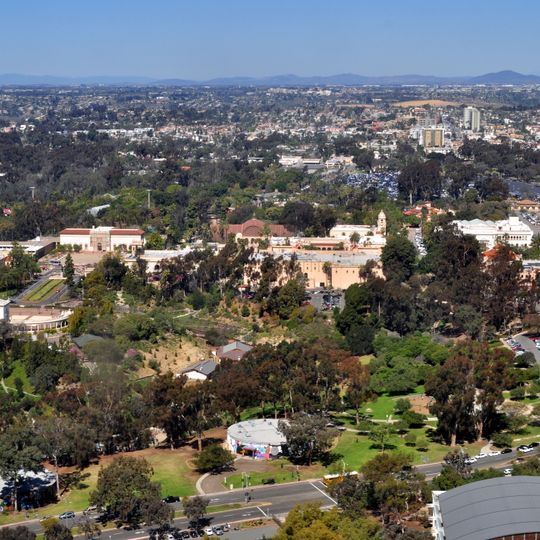
El Prado Complex, Spanish Colonial Revival architecture district in Balboa Park, San Diego, United States.
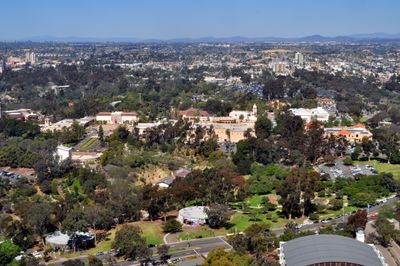
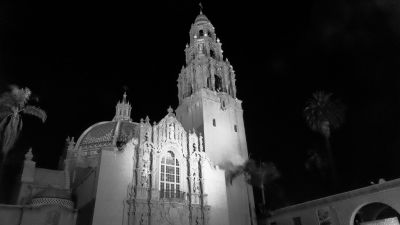
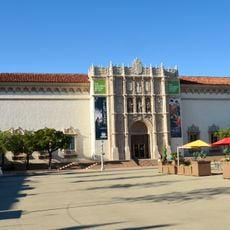
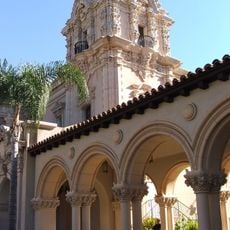
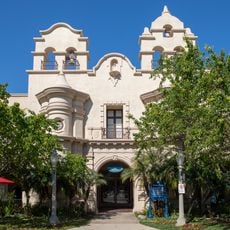
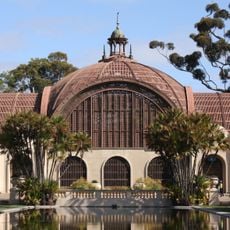
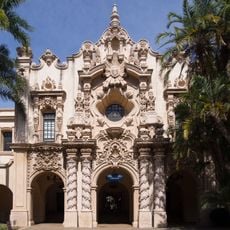
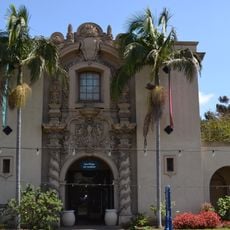
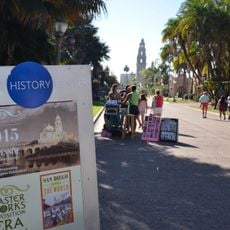
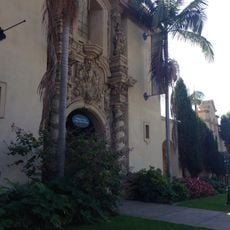
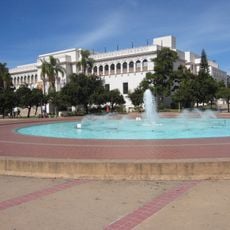
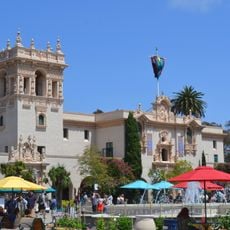
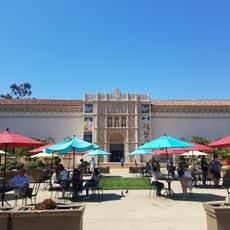
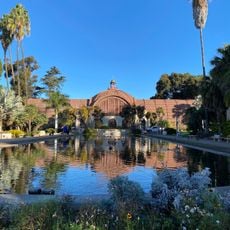
The El Prado Complex is a 13-acre (5.3 ha) historic district in Balboa Park, San Diego, with 13 contributing buildings and one contributing structure. Its Spanish Colonial Revival buildings have off-white and tan stucco walls and red clay tile roofs. A long, low building with a raised central section and small bell tower stands near the centre-left; to its right, a lower wing with an arched entrance extends horizontally, and further right a taller building has a domed tower.
These buildings were designed by Bertram Goodhue and Carleton Winslow for the Panama-California Exposition of 1915-16, a world's fair that introduced this architecture to the public. The complex was later expanded and reused during a second exposition in 1935-36.
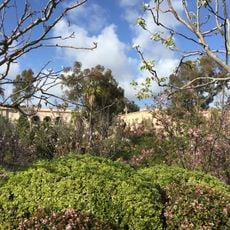
El Prado is the central avenue of the 1915 Panama-California Exposition, lined by the arcade and the fair's exhibition halls. The Indian Arts Building, renamed the Russia and Brazil Building in 1916, became the House of Charm in 1935 and now holds the Mingei International Museum. The Foreign Arts Building became the House of Hospitality. The Alcazar Garden was laid out for 1915 as Montezuma's Gardens and renamed for the 1935 fair.
The entrance begins at Cabrillo Bridge, which leads visitors through a continuous covered arcade to various museums and gardens. The walkways are well marked and the layout makes it easy to explore the buildings without getting lost.
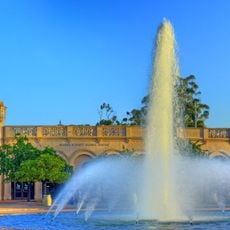
The Spreckels Organ Pavilion, built in 1915, still serves its original purpose as an outdoor music venue. This historic instrument is one of the few remaining fully functional organs of its size and quality in a public setting.
The community of curious travelers
AroundUs brings together thousands of curated places, local tips, and hidden gems, enriched daily by 93,764 contributors worldwide.