Cajon Pass, Road and rail mountain pass in San Bernardino County, United States.
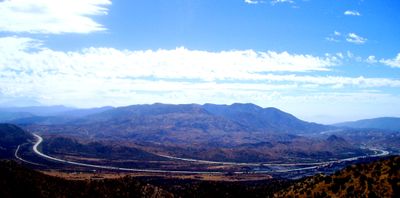
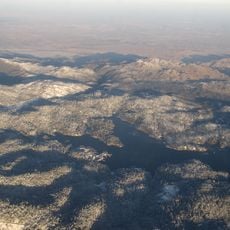
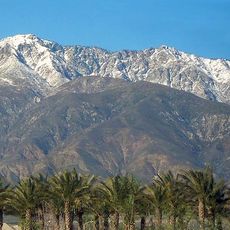
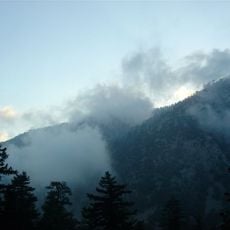
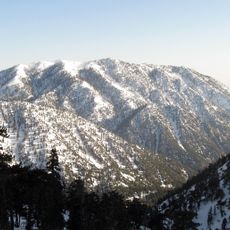
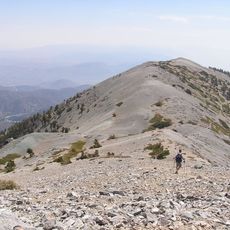
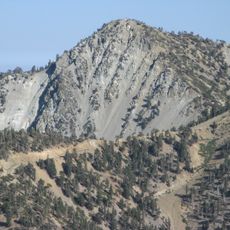
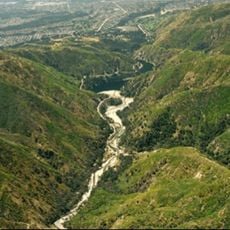
Cajon Pass is a mountain crossing between the San Bernardino Mountains and San Gabriel Mountains in Southern California, reaching an elevation of about 3,777 feet. The Interstate 15 and two major railway lines cut through the pass, forming a crucial transportation corridor that links Los Angeles with the High Desert region.
The first railroad through the pass was built in the 1880s by the California Southern Railroad, connecting Barstow to San Diego across challenging terrain. This rail line transformed transportation in the region and enabled faster movement of goods and people between coastal areas and inland destinations.
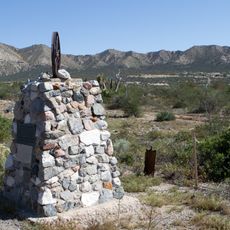
The name comes from Spanish cajón, meaning box or drawer, and refers directly to the Spanish landowner who first explored the area, not to the shape of the pass. It appeared in English on a map in 1852. The pass lies at the head of Horsethief Canyon, where the Mormon Trail and the railway met near Sullivan's Curve; the rock formation there is called Mormon Rocks.
The pass is easily accessed via Interstate 15, which serves as the primary road connection through the area. Keep in mind that the terrain is mountainous and exposed, particularly during extreme weather conditions, so plan your visit accordingly.
Mormon Rocks, a rock formation near Sullivan's Curve where the Mormon Road and the railway run together, is named for the 1851 wagon party of Mormon settlers led by Amasa M. Lyman and Charles C. Rich, who crossed the pass on their way from Salt Lake City to southern California.
The community of curious travelers
AroundUs brings together thousands of curated places, local tips, and hidden gems, enriched daily by 94,069 contributors worldwide.