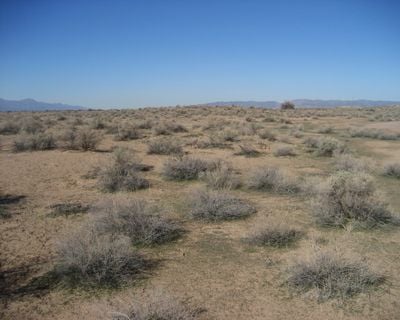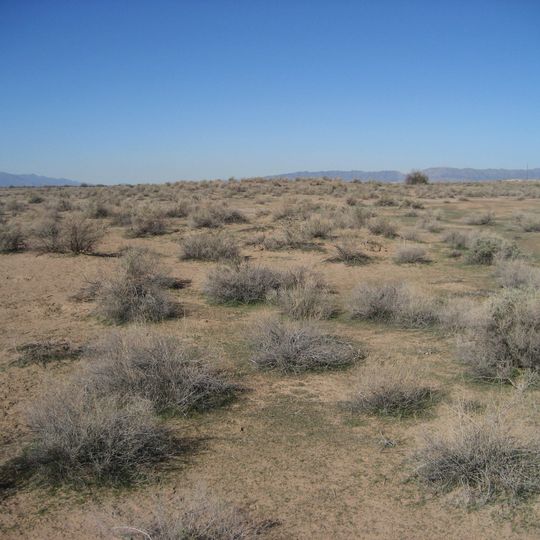
Hohokam Pima National Monument, Archaeological national monument in Pinal County, Arizona, United States.
Hohokam Pima National Monument is an archaeological reserve in Pinal County covering about 1,690 acres and containing the remains of an ancient settlement called Snaketown. The site shows traces of mud dwellings, irrigation channels, and everyday objects that survived thousands of years in the desert.
The area was settled by the Hohokam between 300 BCE and 1200 CE, as excavations between 1934 and 1965 revealed. Those investigations showed a network of irrigation channels that represented one of the region's early technological achievements.
The site is closed to the public, so its heritage is encountered indirectly: artifacts from Snaketown are held at the Arizona State Museum, a scale model is displayed at the Heard Museum in Phoenix, and the Casa Grande Ruins museum in Coolidge and the Huhugam Heritage Center exhibit finds and tribal history. The name Hohokam is an O'odham word meaning "those who have gone."
The site lies within the Gila River Indian Reservation and is not open to the general public. Those interested in learning about the location should reach out to the Gila River Indian Community for information.
The oval depressions at Snaketown were long read as ballcourts, each about 60 metres long and 2.5 metres high. In 2009 a researcher argued their curved sides and uneven long embankments suit no ball game, but match the dance floors used by the Tohono O'odham for Vikita ceremonies into the 1930s.
The community of curious travelers
AroundUs brings together thousands of curated places, local tips, and hidden gems, enriched daily by 92,685 contributors worldwide.