Esperanza Stone, Natural monument at Yaqui River, Mexico
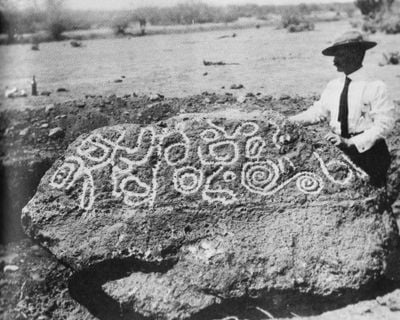
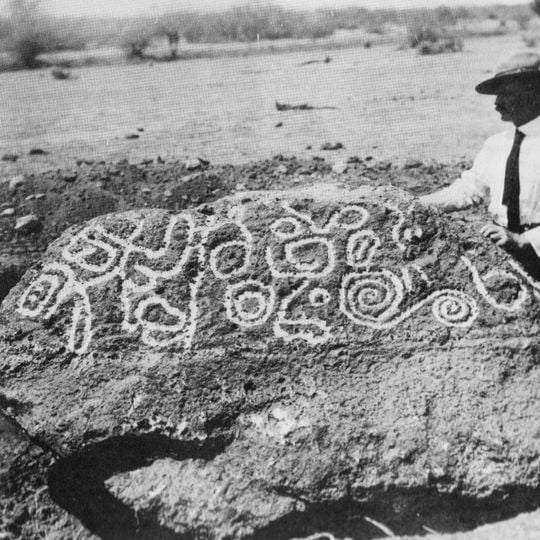
The Esperanza Stone is a brown igneous rock about 8 feet (2.4 m) long, found in the Yaqui valley. Its eastern face, set at roughly a 45-degree angle, carries a deep-cut inscription of interconnected lines, spirals and concentric circles. The symbols include a volute and a swastika, forms also recorded on other stones in Mexico.
The stone was discovered and documented in 1909 by American explorer Major F. R. Burnham and naturalist Charles Frederick Holder during their expedition in the region. This discovery brought the formation to the attention of collectors and researchers interested in its origins.
The carvings include a volute and a swastika, motifs also found on other stones in Mexico. Major F. R. Burnham read the symbols as Mayan, while others classify them as petroglyphs. A local legend held that the stone had fallen from the sky in the past and that the carving was done by human hands.
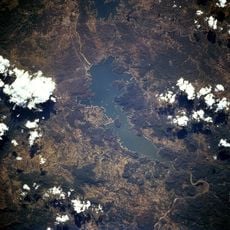
The stone lies in the Yaqui River valley, at the coordinates 28.62559, -109.60759, near the river's edge. The sources record no marked trail, tours or guides, so visitors must arrange their own transport and locate the site themselves. The carved eastern face, cut at about 45 degrees, is the side to examine.
The stone's eastern face, cut at about a 45-degree angle, carries a volute and a swastika, motifs also found on other stones in Mexico. Major F. R. Burnham read the symbols as Mayan, while others classify them as petroglyphs.
The community of curious travelers
AroundUs brings together thousands of curated places, local tips, and hidden gems, enriched daily by 94,051 contributors worldwide.