Huápoca, Archaeological site in Chihuahua, Mexico
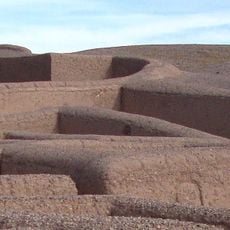
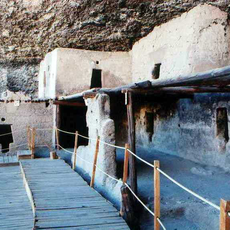
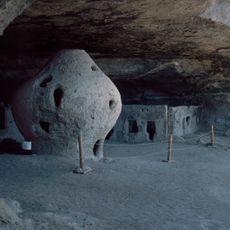
Huápoca is an archaeological complex in Chihuahua featuring multiple cliff dwellings built directly into the canyon walls. The structures include residential rooms, storage areas, and passages that show how people lived within the rock formations.
The cave dwellings of the Huápoca region were built by people of the Paquimé culture, with the Cuarenta Casas complex dated to between 1060 and 1205 CE. In 1898 the Norwegian explorer Carl Lumholtz gave the first reports of caves with houses in the Madera region, discovering Cueva del Garabato, now Cuarenta Casas. Later researchers included H.A. Carey in 1931, E.B. Sayles in 1936, A.V. Kidder in 1939 and R.H. Lister in 1946 and 1958.
The cliff dwellings show how residents adapted their homes directly into the canyon walls for shelter and security. The layout of rooms and storage areas reflects how daily life unfolded in this remote location.
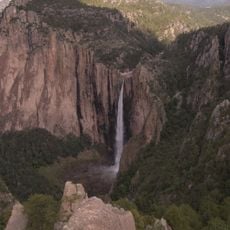
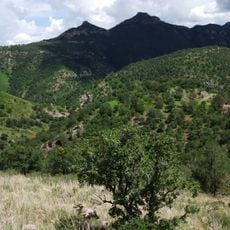
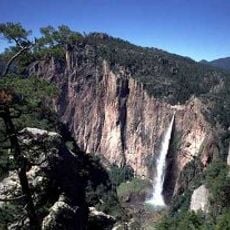
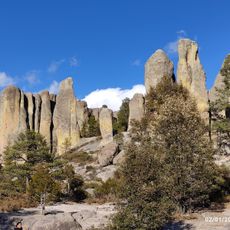
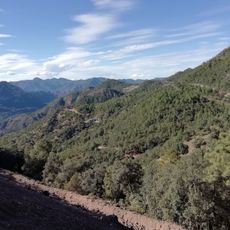
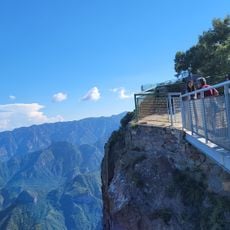
Huápoca lies 36 km west of Ciudad Madera along a dirt road, about 3 km from the Río Papigochi, in the Huápoca Canyon area. The caves cannot be seen from outside the canyon, so an experienced guide is recommended. Some sites, such as Cueva de los Fierros and Cueva de la Puerta, sit mid-slope on near-vertical walls.
In the side canyons southwest of Ciudad Madera, some cave sites are so sheltered that they remain almost intact, and none can be spotted from outside the canyon; you only notice them once you are inside. Cueva de la Puerta preserves adobe floors finished so smoothly they look like cement, and soot-blackened ceilings from centuries of fires.
The community of curious travelers
AroundUs brings together thousands of curated places, local tips, and hidden gems, enriched daily by 94,222 contributors worldwide.