Cueva de la Olla, Archaeological site in Valle de las Cuevas, Chihuahua, Mexico.
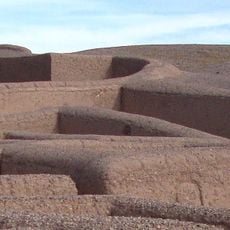
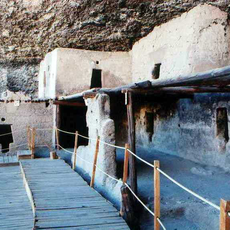
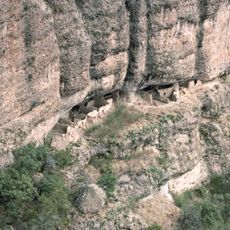
Cueva de la Olla is an archaeological site set within a shallow cave in the Valle de las Cuevas. It holds seven adobe rooms built in the Paquimé style, with T-shaped doors about one meter high. The main feature is a mushroom-shaped granary 2.5 m in diameter and 3.55 m tall, made of coiled dry straw with red and black native designs.
The site was occupied between the 10th and 11th centuries, marking the transition from nomadic groups to settled farmers in this region. This shift reveals how early communities adapted their way of life to support agriculture.
The name comes from the cuexcomate, a mushroom-shaped granary 2.5 m across and 3.55 m tall, built of coiled dry straw and once coated in red and black native designs thought to invoke protection of the stored food. Its 80 cm top opening was likely covered with palm and reed, and holes in the walls allowed grain to be drawn out and air to circulate.
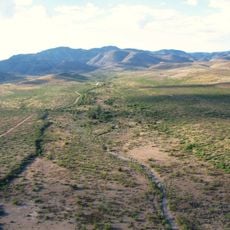
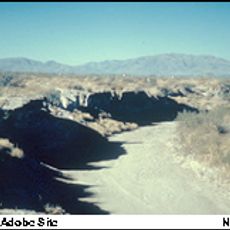
Reach the site from Casas Grandes via the road to Colonia Juárez, continuing to Ejido Ignacio Zaragoza; the last stretch is a dirt track with single-lane sections. From the ejido it is 2 km to Rancho Casa Blanca and 1 km more to the site. Cueva de la Golondrina lies 400 m from Cueva de la Olla.
The storage facility was engineered large enough to hold surplus food supplies for an entire community through extended periods. This reveals how critical planning and food reserves were to the survival of early settlers in this harsh landscape.
The community of curious travelers
AroundUs brings together thousands of curated places, local tips, and hidden gems, enriched daily by 92,887 contributors worldwide.