Guevavi Mission, Mission ruins in Santa Cruz County, Arizona, United States
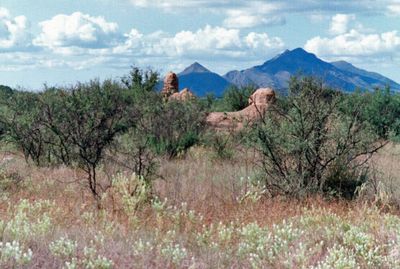
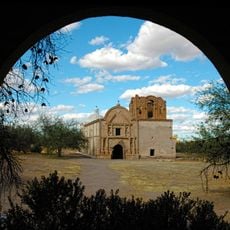
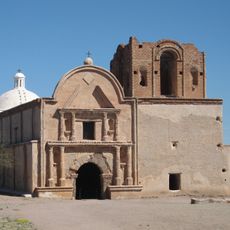
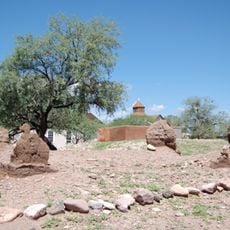
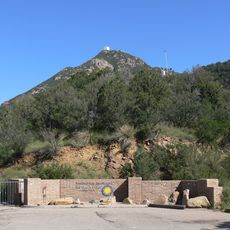
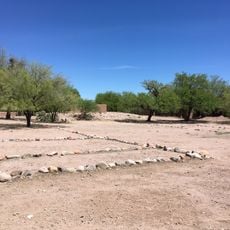
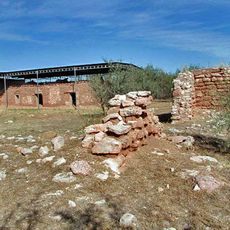
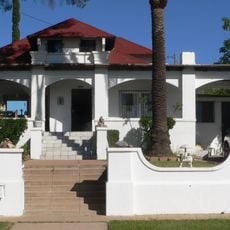
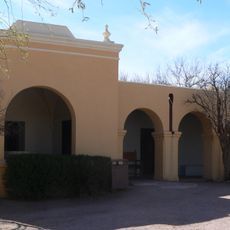
Guevavi Mission is the site of a Jesuit mission founded in the early 18th century near the Mexican border. The remains consist of adobe church walls and monastery foundations positioned on a hill overlooking the Santa Cruz River valley.
Eusebio Kino and Juan María de Salvatierra founded the mission in 1691 at a Sobaipuri-O'odham settlement Kino had visited in 1690. It became the Jesuit cabecera (headquarters) in 1701, when Pima laborers built a small adobe chapel. In 1751 Joseph Garrucho had a larger church, 15 by 50 feet, built; its ruins remain. Apache attacks led to the cabecera moving to Tumacácori and the mission's abandonment by 1776.
Guevavi comes from an O'odham word meaning "big water," probably referring to the Santa Cruz River that ran through the area. Priests taught the Pima to grow corn, wheat and peaches, raise cattle and sheep, and work leather, while the people kept making pottery and fermenting cactus and wild fruit into drinks, which the priests disliked.
This archaeological site is accessible only through guided tours arranged at a nearby national park, best visited during warmer months. Visitors should wear layers, bring comfortable walking shoes, and expect uneven rocky terrain.
The Guevavi gold mine drew activity to the area between 1814 and 1849 and was reopened in 1864 under American control until its abandonment in 1888. Miners used part of the mission grounds as a cemetery. The mission ruins were added to Tumacácori National Historical Park and named a National Historic Landmark in 1990.
The community of curious travelers
AroundUs brings together thousands of curated places, local tips, and hidden gems, enriched daily by 93,644 contributors worldwide.