MMT Observatory, Optical telescope at Mount Hopkins, United States
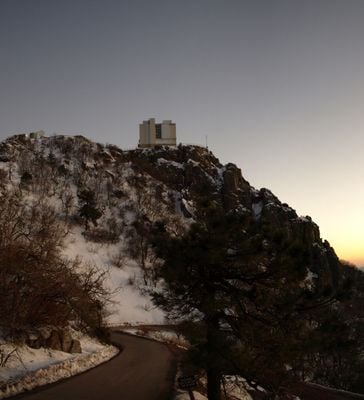
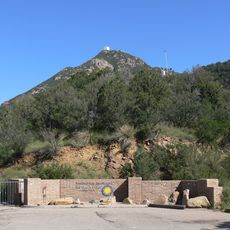
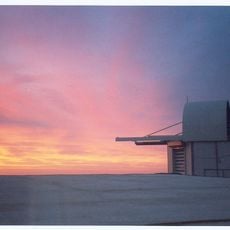
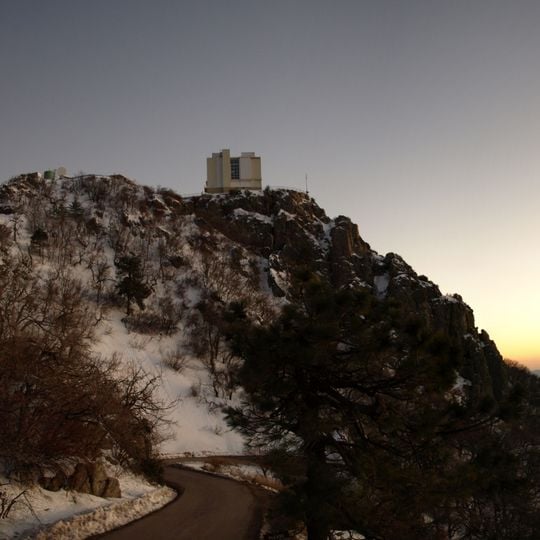
The MMT Observatory stands on the summit of Mount Hopkins in the Santa Rita Mountains, 55 km south of Tucson, Arizona. The rectangular building has a light beige facade, a flat roof with a thin antenna at its right edge, and a tall dark recessed panel on the front. Its walls and roof roll back completely so the telescope cools quickly.
The MMT opened in 1979 with six 1.8-metre borosilicate mirrors donated by the NRO after the KH-10 DORIAN reconnaissance mission was cancelled, giving the equivalent light-gathering area of a 4.5-metre telescope. Its altitude-azimuth mount and co-rotating building, proposed by Aden Meinel, set the pattern for later large telescopes. In 1998 the six mirrors were replaced by a single 6.5-metre honeycomb mirror cast by Roger Angel's Steward Observatory team; the rebuilt telescope was rededicated on 20 May 2000.
The name MMT originally stood for Multiple Mirror Telescope, after the six 1.8-metre mirrors that gathered light until 1998; since the single-mirror upgrade it is no longer an acronym. The visitor centre in Amado, Arizona, presents the site to the public, while the telescope itself is run jointly by the University of Arizona and the Smithsonian Institution.
The summit is reached by mountain roads about 55 km south of Tucson, and the visitor center is not on the mountain but in Amado, Arizona, down in the valley. The telescope building rolls back its walls and roof, so the summit is exposed; bring warm layers even in summer. Check road and weather conditions before setting out.
The primary mirror was specially engineered by the Steward Observatory Mirror Laboratory using a honeycomb internal structure that dramatically reduces mass. This innovative design enables better performance and faster response to temperature fluctuations compared to traditional solid mirrors.
The community of curious travelers
AroundUs brings together thousands of curated places, local tips, and hidden gems, enriched daily by 92,820 contributors worldwide.