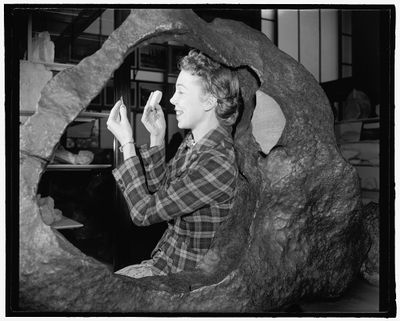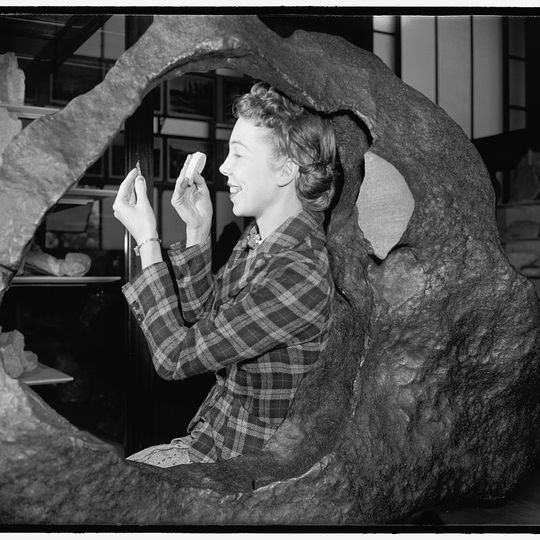
Tucson ring meteorite, Iron meteorite specimen at National Museum of Natural History, US.
The Tucson Ring meteorite is an iron meteorite on display at the National Museum of Natural History in Washington, DC, weighing around 975 kilograms. It is made mostly of iron and nickel and has a ring-like shape on its surface that gave it its name.
The meteorite was found around 1850 in what is now Arizona and brought to Tucson, where a blacksmith used it as an anvil. Scientists later identified its origin and moved it into research collections, where its mineral content could be studied in detail.
For years, this rock served as an anvil in a Tucson blacksmith shop before anyone recognized it as something from space. That history connects the working life of a frontier town with what scientists now know about the early solar system.
The display is inside the National Museum of Natural History on the National Mall in Washington, DC, within walking distance of many other city landmarks. It is worth checking the building map in advance, as the museum is large and spread across several floors.
Researchers found a rare mineral called brezinaite inside this meteorite, a compound that almost never occurs on Earth and can only form under conditions found in space. That discovery gave scientists a clearer view of chemical processes from the earliest period of the solar system.
The community of curious travelers
AroundUs brings together thousands of curated places, local tips, and hidden gems, enriched daily by 92,813 contributors worldwide.