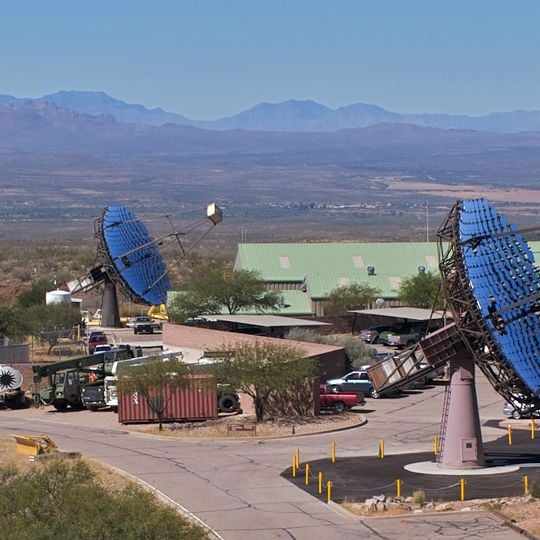
VERITAS, Gamma-ray telescope array in Mount Hopkins, Arizona
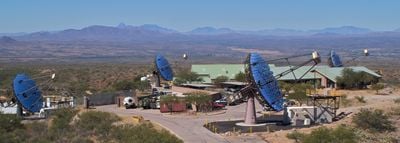
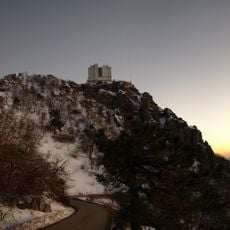
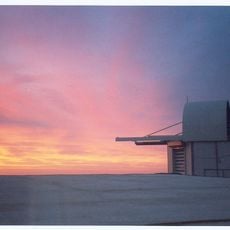
VERITAS is a ground-based gamma-ray observatory at the Fred Lawrence Whipple Observatory in southern Arizona, made up of four 12-metre Imaging Atmospheric Cherenkov Telescopes spaced about 100 metres apart. Each telescope has a faceted reflector of 350 hexagonal mirror facets on a steerable optical support and a camera of 499 photomultiplier tubes. The array, completed in 2007, detects Cherenkov light from air showers in the 50 GeV to 50 TeV range.
VERITAS was conceived as a next-generation Cherenkov telescope array for the western hemisphere, originally planned with seven telescopes but built with four. The first telescope was completed in January 2007, and all four began operating on 27–28 April 2007. In summer 2009 telescope No. 1 was moved to improve sensitivity by 30%, and in summer 2012 all photomultiplier cameras were replaced.
The VERITAS project brings together scientists from institutions across the United States, Canada, Germany, and Ireland for gamma-ray research.
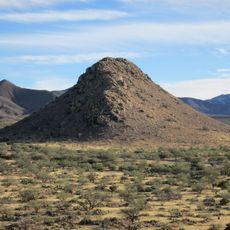
VERITAS is a working research array at the Fred Lawrence Whipple Observatory, not a site with visitor facilities, so viewing the four 12 m reflectors is done from outside the array. Observations run about 1,200 hours a year and stop in July and August because of the monsoon, so plan around those months. The array sits at roughly 1,268 m in dry desert terrain.
The array was first planned with seven telescopes, but only four were built. Telescopes 1 and 4 originally stood just 35 metres apart and nearly duplicated each other; in summer 2009 telescope 1 was moved, raising array sensitivity by 30% and cutting source detection time by 60%.
The community of curious travelers
AroundUs brings together thousands of curated places, local tips, and hidden gems, enriched daily by 92,745 contributors worldwide.