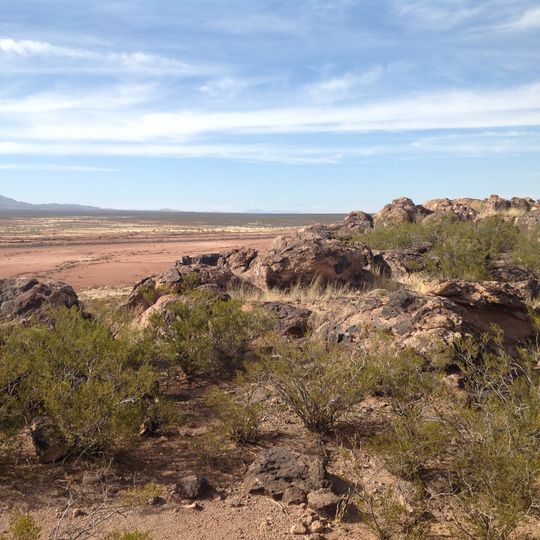
Jornada del Muerto, Desert basin in New Mexico, United States
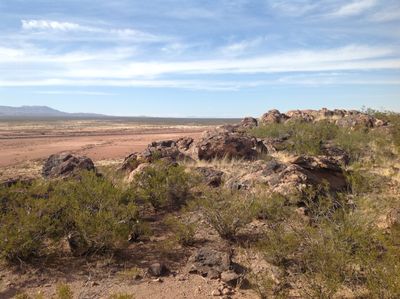
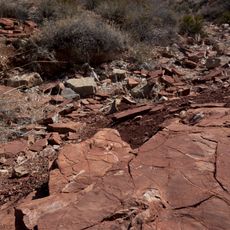
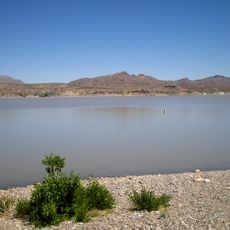
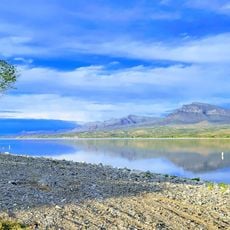
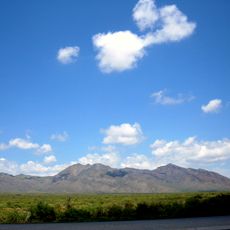
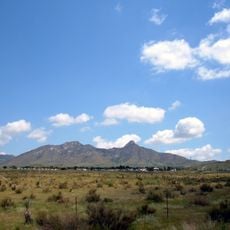
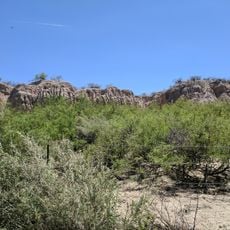
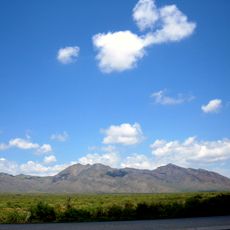
The Jornada del Muerto is a flat desert basin in New Mexico, 20 miles wide east to west and 160 miles north to south, lying between the Oscura and San Andres Mountains to the east and the Fra Cristóbal and Caballo Mountains to the west. Its bare reddish-brown and tan soil carries faint tracks, with dark boulders and sparse green shrubs; a pale ridge lines the horizon. It forms part of the Chihuahuan Desert.
Juan de Oñate's colonizing expedition crossed the Jornada in 1598, taking five days with little water; the shorter route suited ox-drawn carts and livestock better than the Rio Grande. The name arose in 1670 when a German's bones were found along the trail, and Aleman became a watering place on the route. In 1680 some 2,000 Spanish settlers retreated south across it during the Pueblo Revolt; Diego de Vargas led new settlers north in 1692.
The name comes from a tragic 17th-century incident that visitors learn about when exploring this remote area. The landscape today remains sparse and largely uninhabited, shaped by its harsh desert conditions.
This desert has very few water sources, so travelers need to carry large amounts of water for any journey through the area. The best seasons to visit are winter or early spring, when temperatures are more manageable.
A major scientific site is located within this area, where a historic test took place in 1945. This location marks where atomic science was first demonstrated in practice.
The community of curious travelers
AroundUs brings together thousands of curated places, local tips, and hidden gems, enriched daily by 94,778 contributors worldwide.