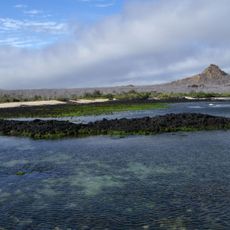
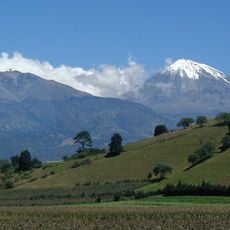
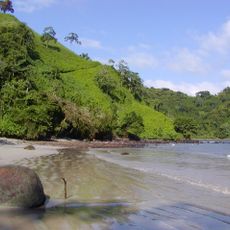
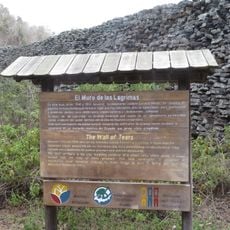
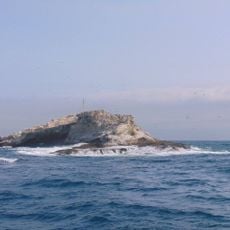
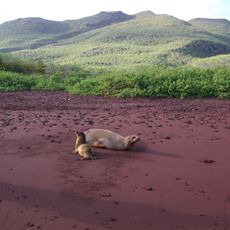
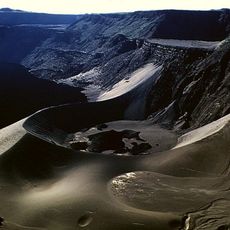
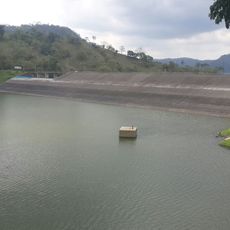
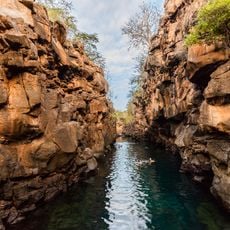
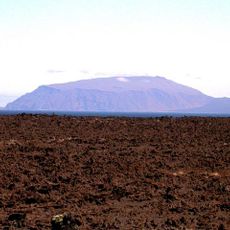
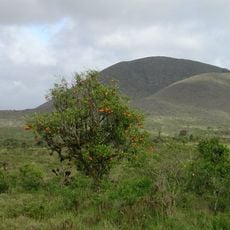
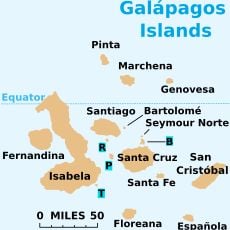
Volcán Wolf, Shield volcano at northern end of Isabela Island, Galápagos Islands, Ecuador.
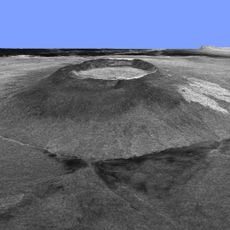
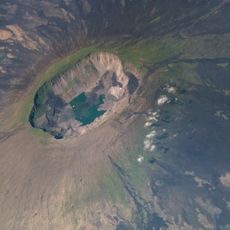
Volcán Wolf is a shield volcano at the northern tip of Isabela Island, featuring a broad, gently sloping cone built by countless lava flows. The caldera spans several kilometers across and displays the characteristic flat profile of this volcano type.
The volcano began its documented eruptive history in 1797 and has shown activity at regular intervals since then. This ongoing volcanic dynamism has shaped the landscape of northern Galápagos for over two centuries.
The volcano is named after Theodor Wolf, a German geologist who studied the Galápagos in the 19th century; Wolf Island to the north also bears his name. On its slopes live Chelonoidis nigra becki, a saddleback tortoise subspecies, and the pink land iguana, found by park rangers in 1986 and identified as a separate species in 2009.
Visitor access varies depending on current volcanic activity, as authorities establish safety zones around the crater. It is important to check local conditions before your visit and hike only in permitted areas.
Wolf's lavas resemble those of the Galápagos Spreading Center, a mid-ocean ridge over 200 km away, rather than those of neighbouring Ecuador and Darwin volcanoes. Geologists link this to interaction between the plume centred on Fernandina and the upper mantle. The volcano's steep slopes reach 35 degrees in places, and its caldera gained a stepped profile through collapse after the last eruption.
The community of curious travelers
AroundUs brings together thousands of curated places, local tips, and hidden gems, enriched daily by 94,229 contributors worldwide.