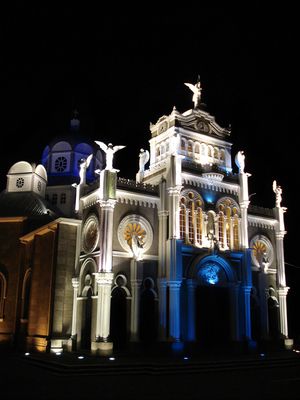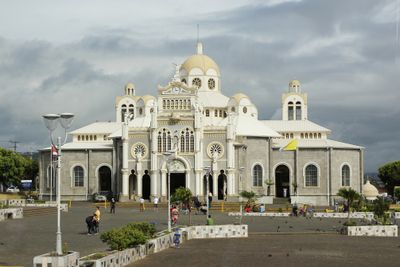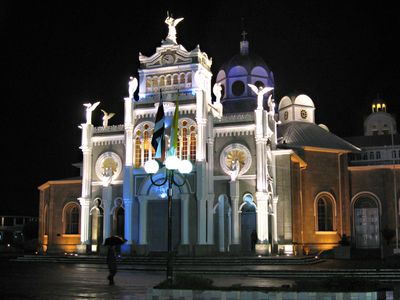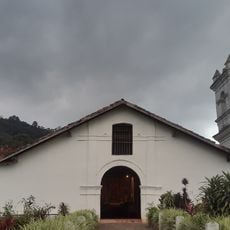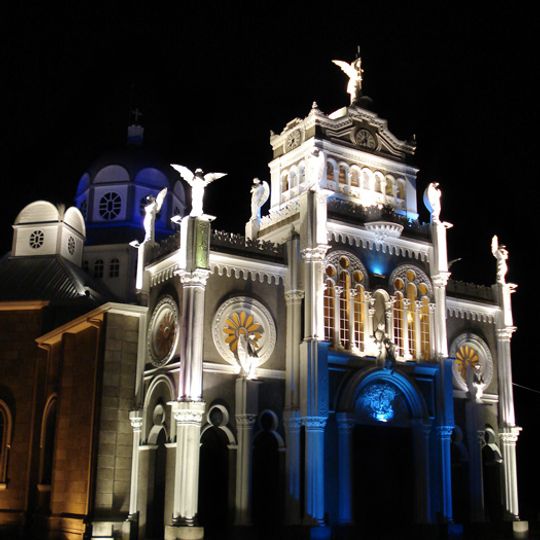
Nuestra Señora de los Ángeles, Byzantine Revival basilica in Cartago, Costa Rica.
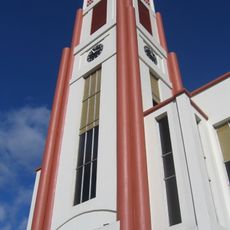
Nuestra Señora de los Ángeles is a Byzantine Revival basilica of pale stone, built from 1912 to designs by Luis Llach Llagostera. A ribbed central dome on a drum of arched windows rises above a clock set in the facade; two slender bell towers with bulbous caps flank it. The wide entrance arch is topped by a row of tall arched windows, and a large open plaza lies in front.
The Basilica was built between 1912 and 1924 under architect Luis Llach Llagostera, who applied Byzantine architectural principles to its design. Construction took place at a location where religious devotion had already existed since the 17th century, rooted in the discovery of a small statue.
The Basilica serves as the spiritual center of an annual pilgrimage where believers from across the region walk to honor La Negrita, the nation's black Madonna statue. The figure is regarded by many as a protective patron, shaping the religious identity of those who visit this place.
Access to the crypt and the rock of the finding was rebuilt in 2004, and the entrance now lies behind the basilica rather than inside it, so that sick visitors and people with disabilities can enter. The spring beside the rock is piped to a fountain a few metres outside the building, where pilgrims drink, fill bottles and wash. On 1 August, the eve of the feast, the approach fills with walkers arriving from San José and beyond.
The spring does not rise under the altar: it emerges beside the rock where Juana Pereira is said to have found the image in 1635, in the underground crypt. An internal pipe carries the water a few metres outside the basilica to a basin, where pilgrims drink it, fill bottles and wash themselves.
The community of curious travelers
AroundUs brings together thousands of curated places, local tips, and hidden gems, enriched daily by 93,808 contributors worldwide.