Pyramid of the Sun, Pyramid in Teotihuacan, State of Mexico, Mexico
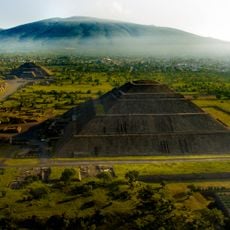
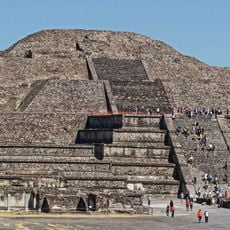
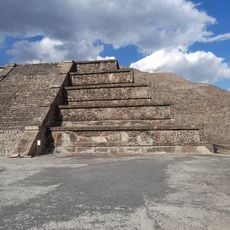
The Pyramid of the Sun is a stepped pyramid of rough, grayish-brown stone blocks in Teotihuacan, State of Mexico, rising 65 meters. Its core is adobe, once covered with painted stucco, and it has a broad square base with sloping tiers and a central staircase. A square platform with an irregular surface remains at the top.
Construction started around the year 200 and proceeded in several stages, with each phase enlarging the structure. Teotihuacan reached its peak as a major religious and urban center between the 3rd and 6th centuries.
The name comes from the Aztecs who rediscovered this site centuries after its construction and linked it to the sun and creation in their worldview. Today visitors climb the steep steps and feel the physical effort this monument has always demanded from those who approach it.
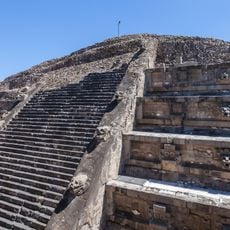
The main staircase has 238 steps today, with landings between sections that make the ascent easier. The climb is steep and uneven, so sturdy footwear helps. A seven-metre pit at the foot of the stairs, found in 1971, marks the entrance to the tunnel system beneath the pyramid.
In 1971 archaeologist Ernesto Taboada found a seven-metre pit at the foot of the main staircase, leading to a cave six metres below the pyramid's centre. Once thought a natural lava tube and linked to Chicomoztoc, it is now considered man-made, perhaps a royal tomb.
The community of curious travelers
AroundUs brings together thousands of curated places, local tips, and hidden gems, enriched daily by 92,080 contributors worldwide.