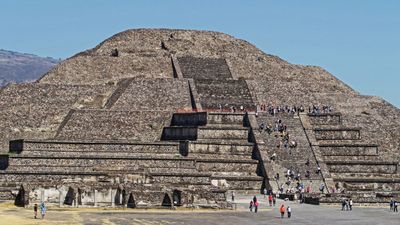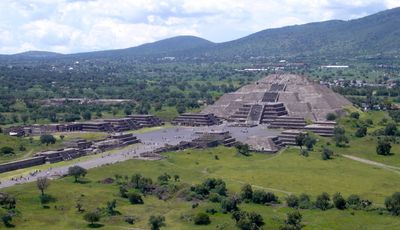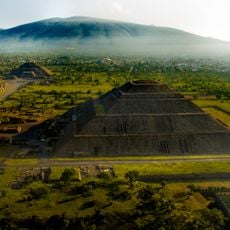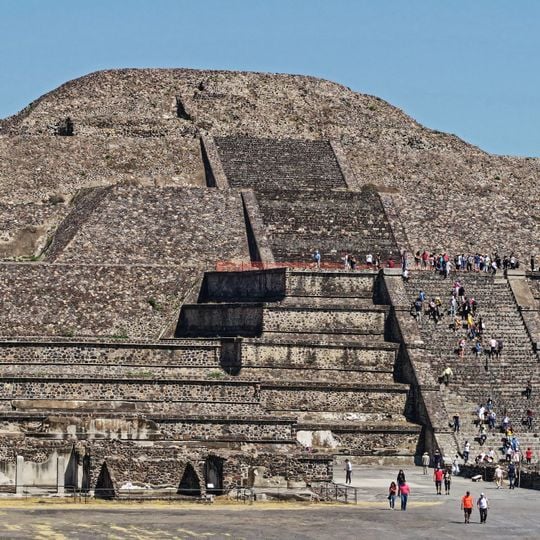
Pyramid of the Moon, Pre-Columbian pyramid in Teotihuacan, Mexico.
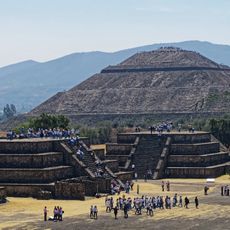
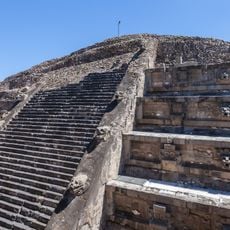
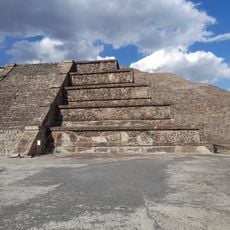
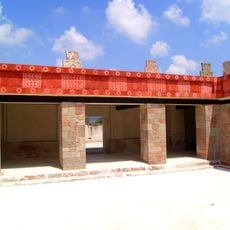
The Pyramid of the Moon is a multi-tiered structure at the northern end of the Avenue of the Dead in Teotihuacan, rising 46 meters (151 feet) above the surrounding plaza. The silhouette of this construction mimics the Cerro Gordo volcano behind it, forming a ceremonial complex together with smaller temples and platforms at its base.
The construction of this structure occurred in seven building phases between 100 and 400 CE, with each layer expanding and covering the previous one. The city reached its peak around 450 CE before being abandoned around 550 CE for reasons not fully understood.
The name of this structure comes from Aztec pilgrims who visited Teotihuacan centuries after its abandonment and attributed religious meaning to it. Visitors today see the Plaza de la Luna in front of the structure, where ritual dances and ceremonies took place, surrounded by smaller platforms and altars.
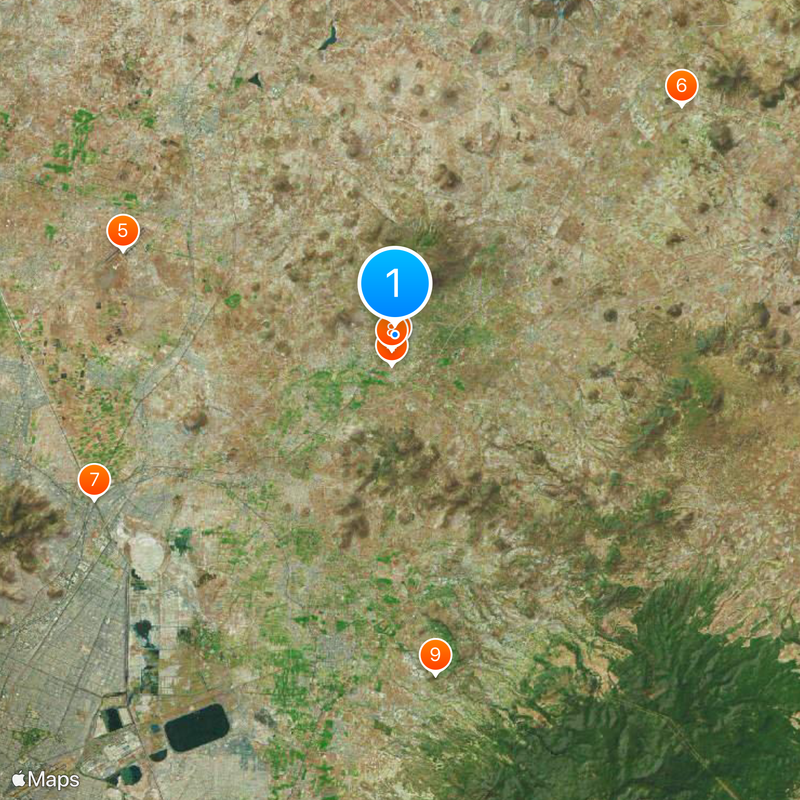
The archaeological site lies roughly one hour from Mexico City and can be reached through guided tours or independent visits on most weekdays. Early morning hours offer cooler temperatures and fewer crowds, making the climb up the steps more comfortable.
Burial chambers beneath the different layers contain offerings of jade, obsidian, and pyrite, uncovered by archaeologists. The alignment of the structure follows astronomical observations and marks solstices through shadow play on specific days of the year.
The community of curious travelers
AroundUs brings together thousands of curated places, local tips, and hidden gems, enriched daily by 91,806 contributors worldwide.