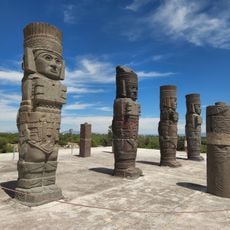
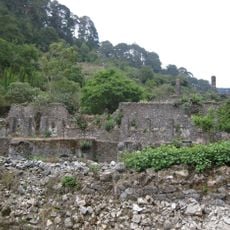
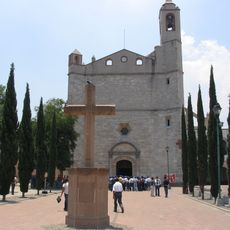
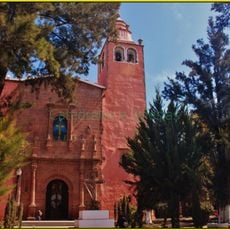
Pahñu, Archaeological site in Tecozautla Municipality, Mexico.
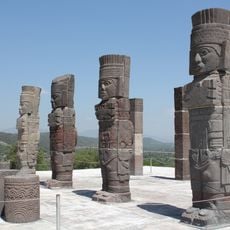
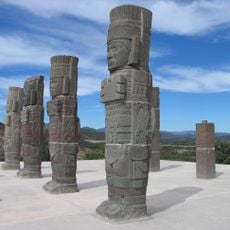
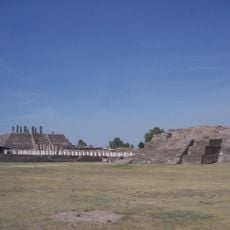
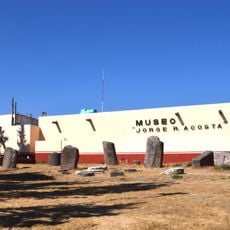
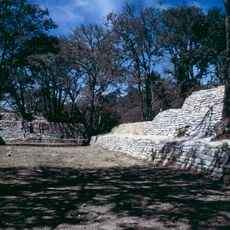
Pahñú is an archaeological site on Hualtepec hill, in La Mesilla, Tecozautla Municipality. It has three plazas: the central one holds the main structure, 17 metres long and possibly over 10 metres high with its temple, plus the Tecpan that housed the rulers and a series of rectangular structures. A small quadrangular structure lies 80 metres west, with a group of buildings and an area of abundant petroglyphs.
The Xajay culture built and occupied Pahñú over roughly five centuries, from about 450 to 950 CE, on the hill above La Mesilla. Its ceramics and architecture link it to the Bajío, especially the Acámbaro area, and it is seen as heir to the Chupícuaro tradition and tied to the Otomi of the Mezquital Valley. Contemporary with Teotihuacan, it followed its own course and outlasted that city's collapse, becoming a regional center in the Epiclassic. Excavation by INAH began in 2007 and the site opened to the public in 2015.
The name comes from the Otomi language, where 'pa' means heat and 'hñu' means pad, reflecting the indigenous roots of the Mezquital Valley. These words show how the original inhabitants connected their surroundings to everyday life.
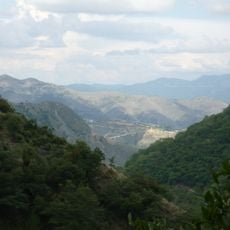
The site sits on Hualtepec hill near La Mesilla, about 30 minutes from Tecozautla by bus or car. INAH began work in 2007 and opened it to the public in 2015. Paths cross uneven ground, so wear sturdy shoes and carry water.
Buried layers reveal distinct patterns of how the Xajay culture organized society and developed new technologies over time. The recovered artifacts show details about daily tasks and the tools people relied on for their work.
The community of curious travelers
AroundUs brings together thousands of curated places, local tips, and hidden gems, enriched daily by 93,763 contributors worldwide.