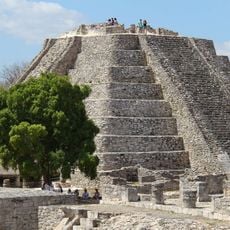
Acanceh, Pre-Columbian Maya archaeological site in Yucatan, Mexico
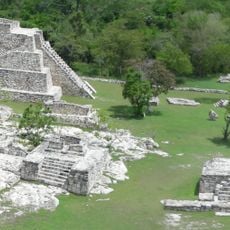
Acanceh is a Maya site standing inside the modern town of the same name, 21 km southeast of Mérida. On the main square, next to the church, are the Pyramid and the Palace of the Stuccos. The pyramid rises 15 m on a base up to 30 m long, with monumental masks of the god Kinich Ahau carved in Puuc style; the palace is 50 m wide and 6 m high, with a stucco frieze about 13 m long showing monkeys and bats.
Acanceh was founded in the Middle Preclassic, between 700 and 250 BC, and grew into one of the largest Maya centres of northern Yucatán. Around AD 300–500 the Itzaes may have arrived in their first migration from the Bacalar lakes region, founding it alongside Chichén Itzá, Izamal and T'Hó. It peaked as a political centre until about AD 1000, then declined in the Postclassic; before the Spanish arrival it fell under the Kuchkabal of the Chakanes.
The architecture shows influences from distant regions through carved masks and elaborate stone carvings in the Palace of Stuccos. The decorations tell of trade connections and cultural exchange across great distances.
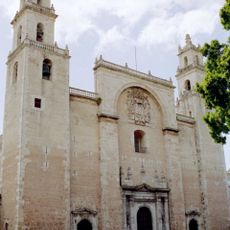
Acanceh lies 21 km southeast of Mérida, reached via a turn-off from the road to Mayapán; the ruins stand in the town's main square, next to the church. The Pyramid and the Palace of the Stuccos are partly restored and open to visitors, while newly found structures under excavation remain closed. The site is embedded in the modern town, so the buildings are seen on foot from the plaza.
Hidden within the pyramid's stone layers are carved masks of Maya deities buried in older construction phases. These layered structures show how the Maya rebuilt their monuments while preserving older elements beneath.
The community of curious travelers
AroundUs brings together thousands of curated places, local tips, and hidden gems, enriched daily by 93,765 contributors worldwide.