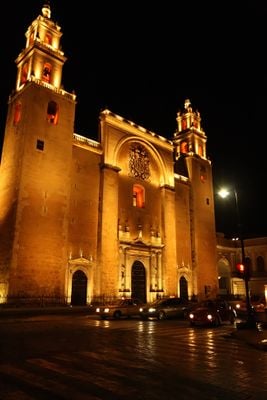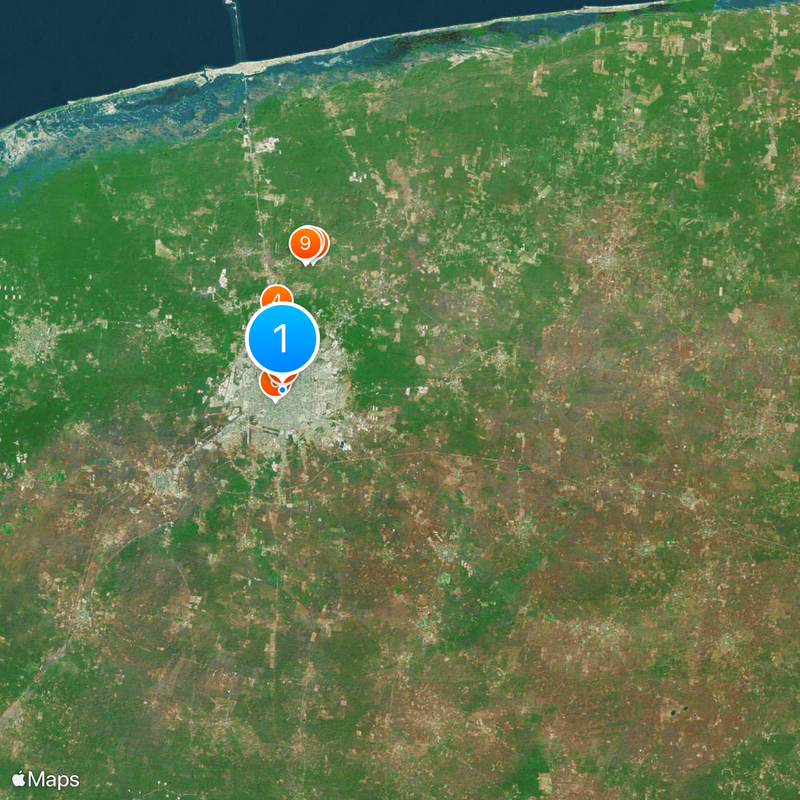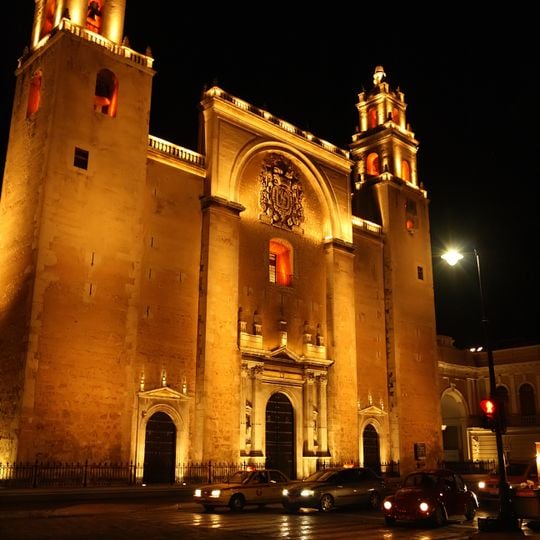
Mérida Cathedral, Renaissance cathedral in Mérida, Mexico.
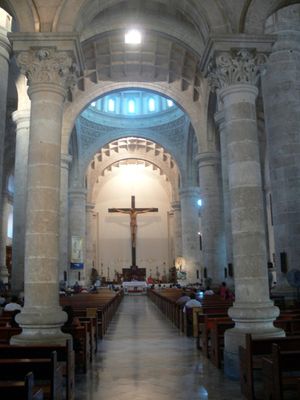
Mérida Cathedral is a house of worship organized into three naves, with the central section featuring coffered vaults while the sides display Gothic lacework patterns. Two Moorish-style towers frame the structure and define its exterior presence.
Construction started in 1562 using stones from a former Maya temple, ordered by King Philip II, making it among the oldest cathedrals in the Americas. The choice of materials reflects the cultural transformation of the early colonial era.
The Christ of Unity statue behind the main altar symbolizes the connection between Spanish and Maya populations during the colonial period in Yucatan. The figure reflects the religious blending that shaped this region.
The cathedral welcomes visitors daily and allows exploration of the interior and religious objects during regular church hours. Plan your visit around religious services, as these times may restrict public access to certain areas.
A Christ statue on the left side, known as the Christ of the Blisters, survived a church fire in a neighboring town without burning. The intense heat darkened the statue, and this discoloration remains visible today as a tangible record of the fire.
The community of curious travelers
AroundUs brings together thousands of curated places, local tips, and hidden gems, enriched daily by 90,848 contributors worldwide.