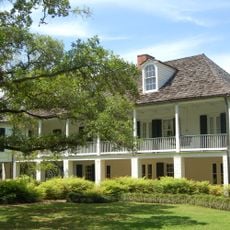
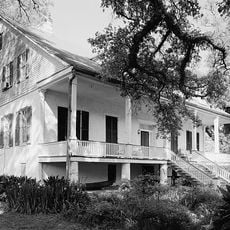
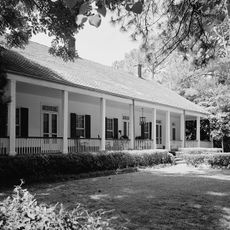
Cherokee Plantation, historic site, former plantation, house of Charles Emile Sompayrac and Clarisse Prudhomme
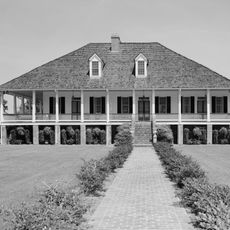
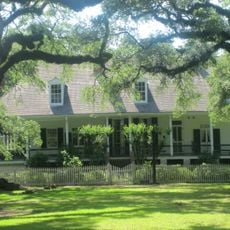
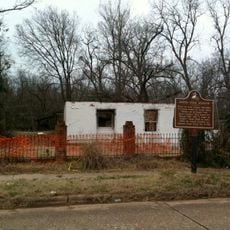
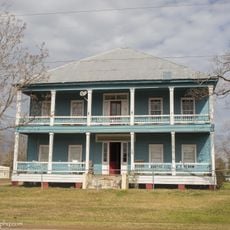
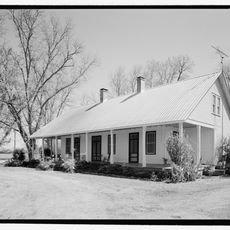
Cherokee Plantation is a plantation house of French Colonial and Creole construction, its framing cut from 18 hand-hewn cypress timbers, a trade attributed to the enslaved people who worked the land. Three patios surround the house; inside are six fireplaces, wide plank floors, bousillage walls and hand-blown window glass. The builder and designer are unknown, and the house is estimated to date from between 1825 and 1849.
Charles Emile Sompayrac bought about 1,133 acres on December 19, 1839, creating the plantation; the sale included a cistern and enslaved people. The house's designer and builder are unknown, and it is estimated to date from between 1825 and 1849, though many attribute it to 1839. In autumn 1839 a political argument led to a duel on the grounds: François Gaiennie, adjutant-general of the Louisiana Militia, fired first and missed, and State Senator Pierre E. Bossier killed him; eleven more men died as the feud continued. The house was not damaged during the Civil War.
The name "Cherokee" began as a nickname given by the enslaved people of the plantation, after the large hedges of Cherokee roses surrounding the property. The site was part of the Côte Joyeuse, the "Joyous Coast" settled by the earliest French planters in Louisiana. The house kept much of its original furniture from the 1891 Murphy purchase, including a rare 18th-century French secretaire bought from a local neighbour.
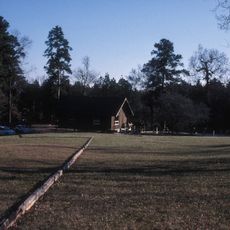
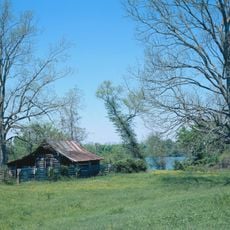
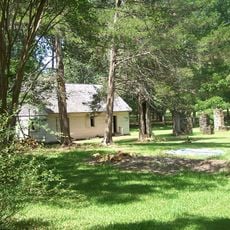
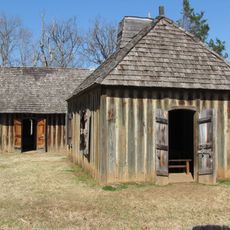
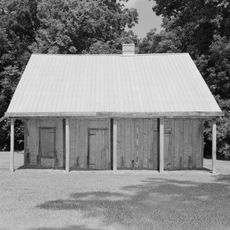
Cherokee Plantation lies near Natchez in Natchitoches Parish, in the Côte Joyeuse area settled by early French planters. The house is private property and not a public museum, so visits depend on the owners' permission; the 1972 sale to Theodosia and William Nolan began the restoration still under way. The grounds hold three old barns, a slave cabin and a log crib.
The property was connected in the 1860s to about 65 people who performed fieldwork and shaped the plantation's economy. The Murphy family, who later owned it, preserved rare furniture pieces including a French secretaire from the 1700s that reflects the property's affluent past.
The community of curious travelers
AroundUs brings together thousands of curated places, local tips, and hidden gems, enriched daily by 94,696 contributors worldwide.