Watson Brake, Prehistoric mound complex in Ouachita Parish, United States.
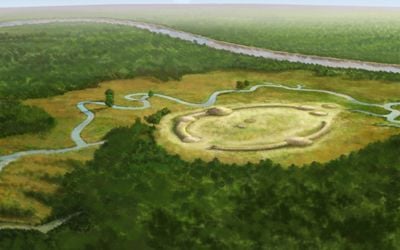
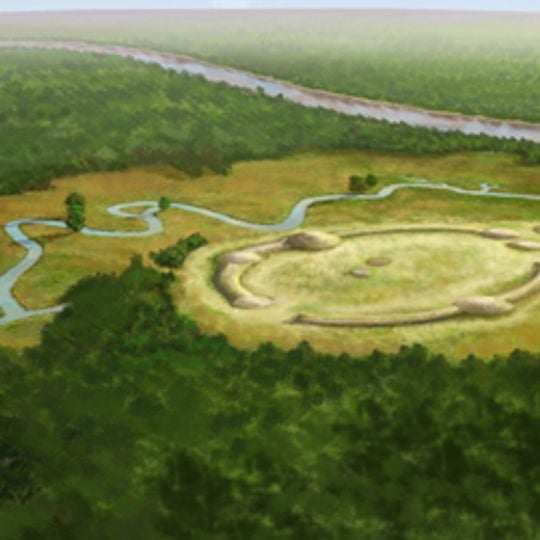
Watson Brake is a prehistoric archaeological site in northern Louisiana consisting of eleven earthen mounds connected by ridges that form an oval pattern approximately 275 meters (900 feet) in diameter. The mounds rise between 1.2 and 7.6 meters (4 and 25 feet) above the surrounding terrain and are positioned in an arrangement that encloses a central open area.
Builders began work on the complex between 3500 and 2800 BCE, creating one of the oldest known monumental earthworks in North America. Archaeologists discovered the site only in 1980 after it lay hidden under dense vegetation for centuries and remained unnoticed for a long time.
The complex belongs to the earliest examples of monumental earthworks on the American continent and shows that settled communities built sophisticated structures over 5,000 years ago. Visitors can still recognize the oval arrangement of the mounds in the landscape, though vegetation and time have altered the original shapes.
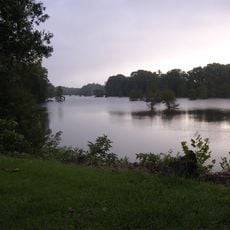
Visits require prior arrangement because part of the terrain is privately owned and can only be entered under specific conditions. The site lies in a wooded area with uneven ground, so sturdy footwear and patience are advisable when exploring the sprawling layout.
Researchers have found that construction activity at the site coincided with El Niño climate events, suggesting that environmental conditions influenced building efforts. This correlation sheds light on the close connection between early societies and the climatic conditions of their surroundings.
The community of curious travelers
AroundUs brings together thousands of curated places, local tips, and hidden gems, enriched daily by 91,255 contributors worldwide.