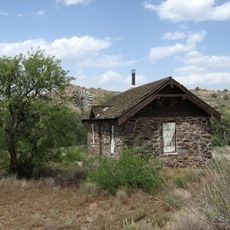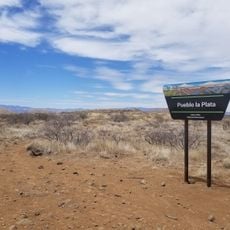
Agua Fria National Monument, Protected archaeological site in Yavapai County, Arizona.
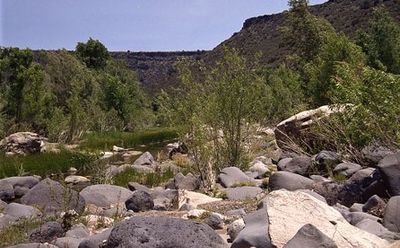
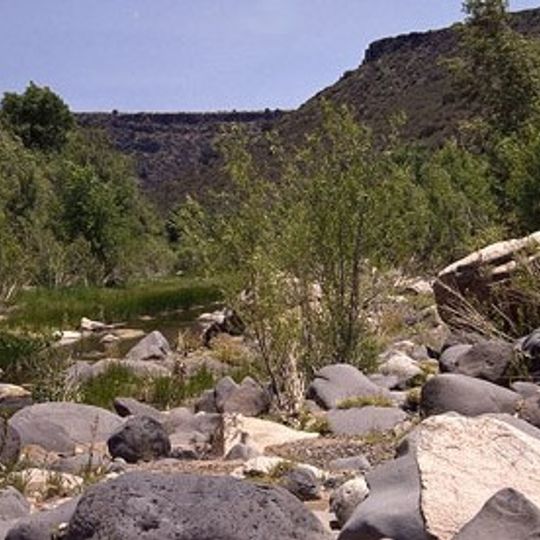
The Agua Fria National Monument spans 72,344 acres of desert grassland terrain, featuring deep canyons and the Agua Fria River running through its boundaries.
The Bureau of Land Management designated this area as a National Monument in January 2000 to protect over 450 prehistoric structures and sites.
The monument contains numerous petroglyphs and large pueblo settlements with 100-room dwellings constructed between 1250 and 1450 by the Perry Mesa people.
Visitors need to bring water, food, and navigation tools as there are no visitor centers, and access is primarily through unpaved roads.
The monument preserves native fish species in the Agua Fria River, including three endangered varieties and the desert pupfish.
Location: Arizona
Inception: January 11, 2000
Operator: Bureau of Land Management
Website: https://blm.gov/national-conservation-lands/arizona/agua-fria
GPS coordinates: 34.15420,-112.07600
Latest update: May 27, 2025 13:18
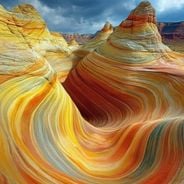
Arizona contains geological formations spanning millions of years alongside evidence of Spanish colonial settlement and prehistoric cultures. The landscape includes sandstone canyons such as Antelope Canyon X and Canyon de Chelly National Monument, extensive desert areas with saguaro and organ pipe cacti, and volcanic remnants at Sunset Crater. Historical sites include Spanish missions like Tumacácori, pueblo ruins at Montezuma Castle, and mining towns such as Bisbee and Jerome. The state holds significant paleontological sites at Petrified Forest National Park, where fossilized tree trunks from the Triassic period lie exposed, and cave systems like Kartchner Caverns with active speleothem formations. The Vermilion Cliffs region displays layered sandstone formations including The Wave, while the Chiricahua Mountains show volcanic rock pinnacles formed from welded ash. Waterfalls such as Havasu Falls and Grand Falls result from geological faulting and seasonal water flow. Archaeological sites document occupation by the Hohokam, Sinagua, and Ancestral Puebloans between 300 and 1400 CE. Tonto Natural Bridge forms one of the largest travertine bridges in North America, while Besh-Ba-Gowah shows Salado culture construction methods from the 13th century. The territory spans from the Sonoran Desert in the south to the Colorado Plateau in the north, creating distinct climate zones and ecosystems within a compact area.
Lake Pleasant Regional Park
33.4 km
Interstate 17
33.4 km
Wet'n'Wild Phoenix
51.5 km
Anthem Veterans Memorial
32.9 km
Pinnacle Peak
51.3 km
Wet Beaver Wilderness
43.3 km
Fort Verde State Historic Park
50.2 km
Goldwater Lake
51.4 km
Black Mountain
39.7 km
Phoenix Arizona Temple
51.5 km
Horsethief Basin Lake
20.6 km
Pioneer Living History Village
38 km
Deer Valley Petroglyph Preserve
52.7 km
Childs-Irving Hydroelectric Facilities
40.9 km
Congregation Beth Israel
48.2 km
Walker Charcoal Kiln
43.6 km
Mayer Red Brick Schoolhouse
31.2 km
Verde River Sheep Bridge
35 km
Gavilan Peak
27.9 km
Pinnacle Peak Park
51.4 km
Fossil Creek Bridge
49 km
Cave Creek Museum
38.1 km
Clear Creek Church
47.2 km
Copper Creek Guard Station
11.2 km
Pioneer Arizona Living History Museum
37.8 km
Verde Valley Archaeology Center and Museum
49.9 km
Spruce Mountain Lookout
45.7 km
Maggie Mine Bridge
11.8 kmReviews
Visited this place? Tap the stars to rate it and share your experience / photos with the community! Try now! You can cancel it anytime.
Discover hidden gems everywhere you go!
From secret cafés to breathtaking viewpoints, skip the crowded tourist spots and find places that match your style. Our app makes it easy with voice search, smart filtering, route optimization, and insider tips from travelers worldwide. Download now for the complete mobile experience.
A unique approach to discovering new places❞
— Le Figaro
All the places worth exploring❞
— France Info
A tailor-made excursion in just a few clicks❞
— 20 Minutes