Sans-Souci Palace, Royal palace in Milot, Haiti
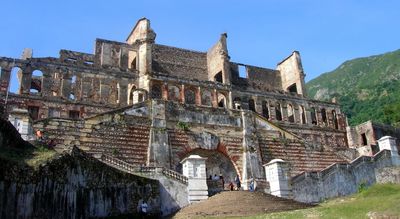
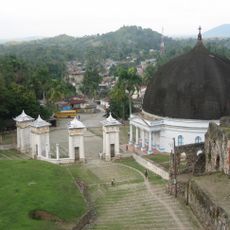
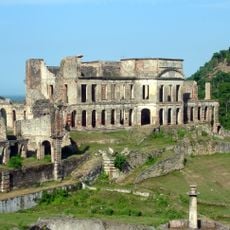
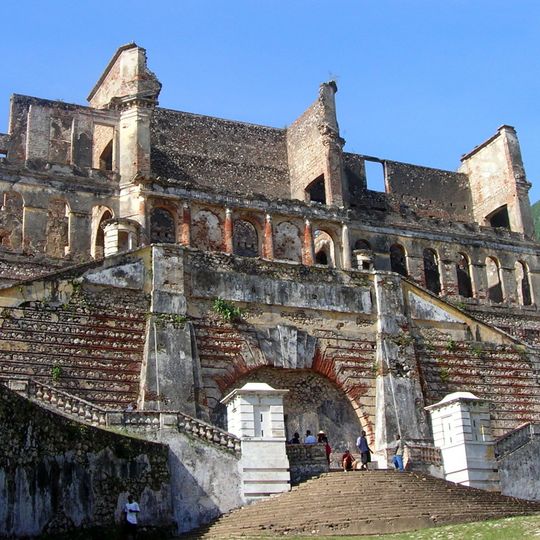
Sans-Souci Palace is a ruined royal residence in the hills of northern Haiti that still displays elements of classical architecture despite its deteriorated state. The structure reveals multiple levels connected by grand staircases, arches, and columns that once formed the rooms and halls of the royal court.
Built between 1810 and 1813 for Henri Christophe, who had himself crowned King Henry I in March 1811 over northern Haiti, with Cap-Haïtien renamed Cap-Henri. The palace was the main residence of the king, Queen Marie-Louise and their children until 1820, when Christophe shot himself in its chapel on 8 October after a stroke and a rising revolt. Earthquakes in May 1842 and February 1843 ruined it, and it was never rebuilt.
The name Sans-Souci, French for "carefree", is shared with Jean-Baptiste Sans Souci, a revolution leader executed by Christophe in 1803; the palace was built only yards from, perhaps over, the spot where he was killed. Under Christophe the residence hosted feasts and dances, and an American physician called it one of the most magnificent edifices of the West Indies.
The ruins sit on a hillside in Milot and can be difficult to access, especially after rain when the ground becomes slippery and muddy. A local guide is helpful for navigating the site safely and learning about the structures.
The palace grounds featured an engineered water system with artificial springs that irrigated gardens and supplied water throughout the multilevel complex. This technical feature demonstrates the engineering expertise required to construct such an ambitious royal project in the mountain terrain.
The community of curious travelers
AroundUs brings together thousands of curated places, local tips, and hidden gems, enriched daily by 92,554 contributors worldwide.