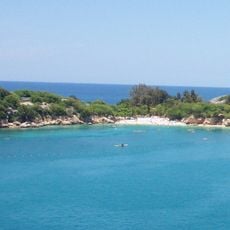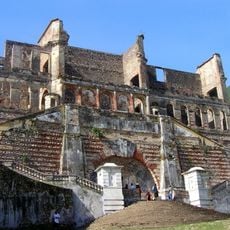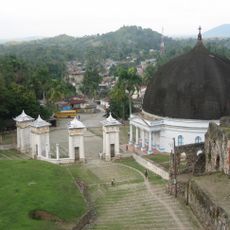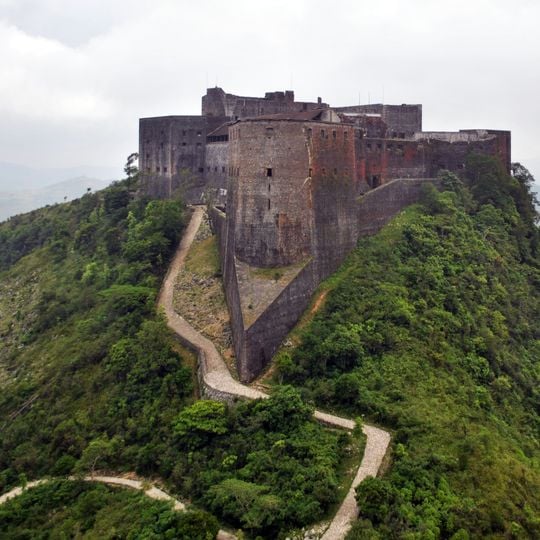
Citadelle Laferrière, Mountaintop fortress in Milot, Haiti
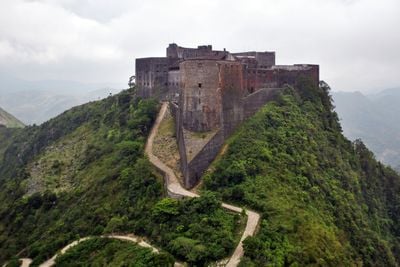
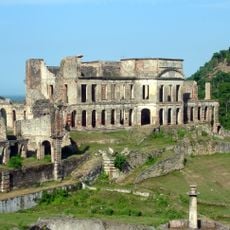
Citadelle Laferrière is a mountaintop fortress in Milot and a World Heritage Site in Haiti. Its stone walls rise about 40 meters high from their foundation, while casemates, courtyards, and storage rooms spread across an area equivalent to several football fields.
Henri Christophe commissioned the fortress in 1805, and construction ran until 1820, employing up to 20,000 workers of whom about 10% died. The plans are attributed to Jean-Étienne Barré, and the work was completed by a Scottish architect named Laferrière, after whom the fortress is called. It was part of a system of fortifications meant to repel a French return that never came.
The name comes from Laferrière, the Scottish architect who completed the works begun in 1806 under Jean-Étienne Barré; the fortress is also called Citadelle Henri after King Henri Christophe. A plaque placed around 1990 recalls that Henri I, who killed himself at the Sans-Souci Palace on 8 November 1820, is buried here, a spot Haitians hold as patriotic.
The climb begins in Milot and follows a steep mountain path that can be completed on foot or by horse. Sturdy footwear is advisable because the trail is rocky and becomes slippery in places, especially after rainfall.
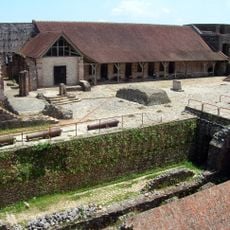
Hundreds of cannons still stand in their positions along the walls and in the casemates, many bearing European maker marks from the 18th century. The fortress also features large cisterns and storage chambers designed so that thousands of defenders could survive for several months without resupply.
The community of curious travelers
AroundUs brings together thousands of curated places, local tips, and hidden gems, enriched daily by 92,614 contributors worldwide.