Mala Compra Plantation Archeological Site, Archaeological site at Bings Landing County Park in Palm Coast, United States.
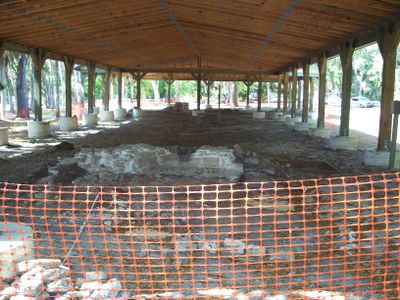
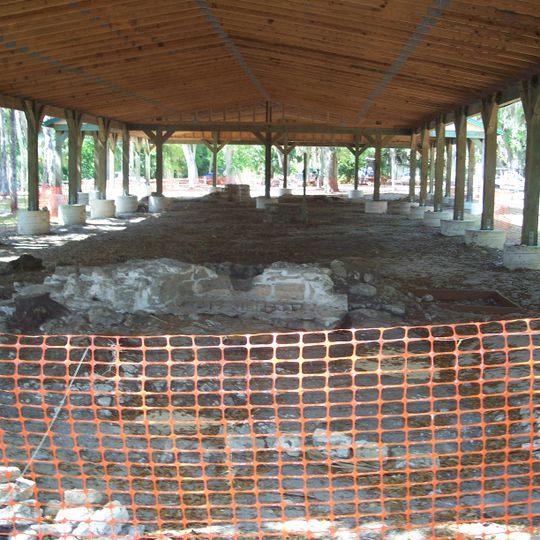
Mala Compra Plantation Archeological Site is an excavated area of exposed stone, brick and mortar foundations on dark soil at Bings Landing County Park, west of State Road A1A and Mala Compra Drive. Low walls and rubble of grey stone, red brick and white mortar form several rectangular foundation sections aligned across the middle of the site. An orange plastic safety mesh fence runs in the foreground, and round concrete footings support a wooden roof structure to the left and rear.
Joseph Marion Hernández founded this cotton plantation in 1816. The site was destroyed during conflict with the Seminoles in the early 1830s.
The name Mala Compra is Spanish for "bad bargain" or "bad purchase", given to the property by an earlier owner before Hernández bought it in 1816. The 14,000-plus artifacts recovered by archaeologists include ceramics, wine bottle fragments, kitchen utensils, kaolin pipes, hinges, nails and gun parts. The main house and detached kitchen are interpreted as an interactive historical exhibit for public education and recreation.
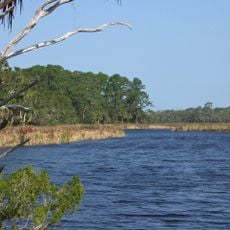
The excavated foundations lie in the open at Bings Landing County Park, west of State Road A1A and Mala Compra Drive on the Matanzas River's east bank. A wooden shelter on round concrete footings stands over part of the remains, and an orange plastic safety mesh fence runs along the near edge of the dig. The site is on the National Register of Historic Places.
In 1831 John James Audubon spent ten days as a guest of Hernández at Mala Compra. There he shot dozens of American coots, and from one male he drew the figure used for a plate in The Birds of America.
The community of curious travelers
AroundUs brings together thousands of curated places, local tips, and hidden gems, enriched daily by 94,560 contributors worldwide.