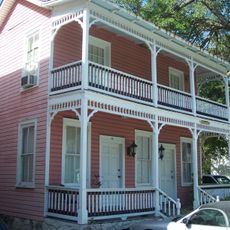
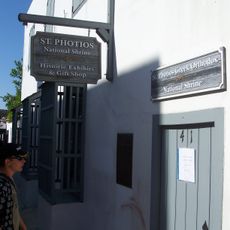
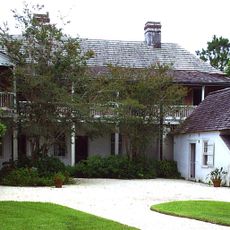
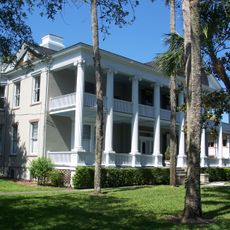
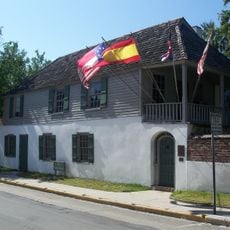
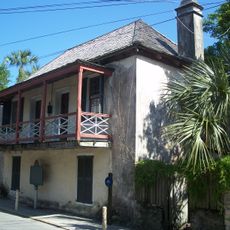
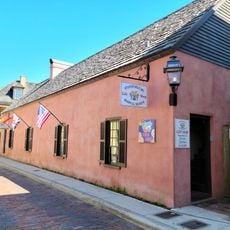
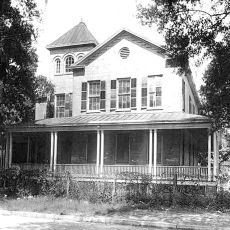
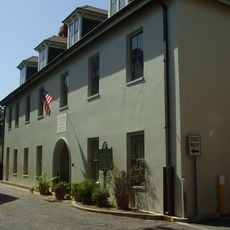
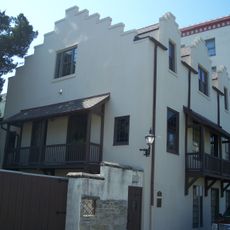
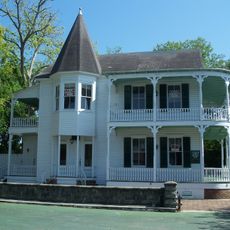
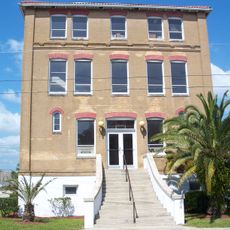
González-Alvarez House, Spanish colonial residence in St. Augustine, Florida, US.
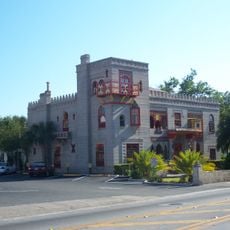
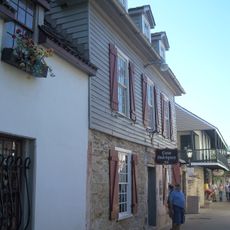
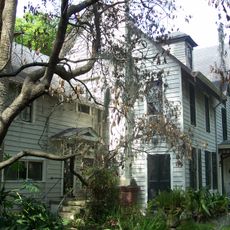
The González–Álvarez House is a two-story building at 14 St. Francis Street in St. Augustine, Florida. Its first floor is built of coquina limestone, while the upper story is wood-framed with clapboard siding, and the house is covered by a hip roof with wooden shingles. The main thick walls run east–west, and an open covered loggia on the east side lets southeasterly winds cool the interior; the ground-floor rooms have tabby concrete floors.
The house was built in 1723 and underwent changes during Spanish, British, and American rule. A notable moment came when Major Joseph Peavett added glass windows, improving comfort inside the structure during the time he occupied it.
The name "Oldest House" dates from a time when the building was thought to date to the 16th century; that claim to be the oldest house in the United States is disputed with the Oldest House in Santa Fe and Acoma Pueblo. The house stayed in the Álvarez family from 1790 to 1882, and from 1911 to 1918 it housed George T. Reddington's South Beach Alligator Farm.
The house stands on the north side of St. Francis Street between Charlotte and Marine Streets, south of downtown St. Augustine. The ground floor is coquina, the upper floor wood, so expect stairs between the two levels. The St. Augustine Historical Society restored the interior to a late 19th-century appearance in 1959–60, and tours run as part of the Oldest House Museum Complex.
The "Oldest House" title dates from a time when the building was thought to have been built in the 16th century; the claim to the oldest house in the United States is disputed with the Oldest House in Santa Fe and Acoma Pueblo. The present structure's earliest phase dates to about 1723.
The community of curious travelers
AroundUs brings together thousands of curated places, local tips, and hidden gems, enriched daily by 94,391 contributors worldwide.