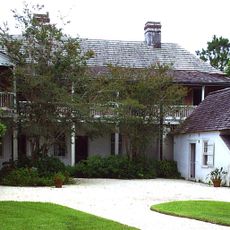
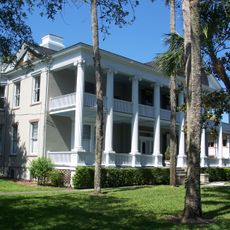
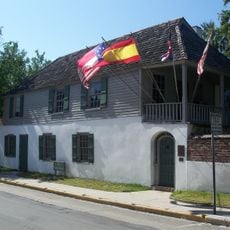
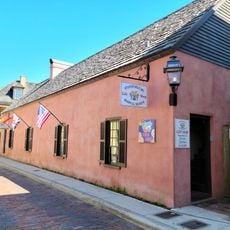
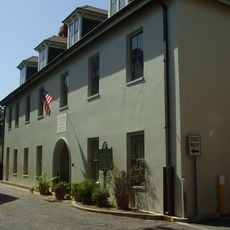
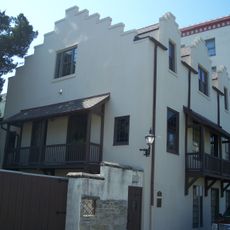
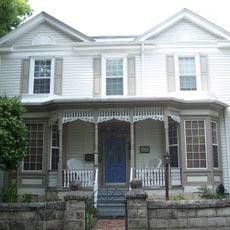
Avero House, Colonial residence in St. Augustine, Florida.
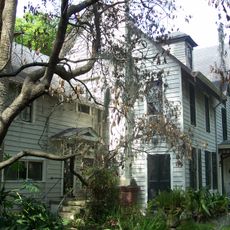
The Avero House is a two-story residential building in St. Augustine featuring an open loggia and walls made of coquina stone laid in horizontal courses. The construction demonstrates the colonial architectural style typical of early Florida.
Built around 1749, the house is among roughly 30 surviving structures in St. Augustine that were constructed before 1821. It represents a key period of Spanish colonial architecture in North America.
The house takes its local name, the Minorcan Chapel, from 1777, when Governor Vicente Manuel de Zéspedes gave it to Father Pedro Camps for refugees of the failed New Smyrna colony, mostly Minorcans, Greeks and Italians. Since 1966 the Greek Orthodox Archdiocese has owned it; the shrine honours the Greek settlers of 1768 and holds relics of 18 early Church saints.
The building is located in downtown St. Augustine and is easily accessible on foot. Visitors should note that it functions as an active religious site and appropriate respect is expected.
The building was constructed from coquina stone, a sedimentary rock formed from shell deposits that was commonly used in Spanish colonial Florida. This locally available material has proven durable over centuries.
The community of curious travelers
AroundUs brings together thousands of curated places, local tips, and hidden gems, enriched daily by 94,672 contributors worldwide.