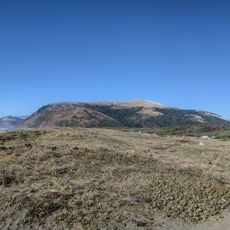
Punta Gorda Light, Lighthouse in Humboldt County, California, United States
Punta Gorda Light is a small two-story reinforced concrete lighthouse, its cylindrical tower topped by the metal framework of the lantern room. The concrete oil house stands beside it. All other station buildings—three dwellings, a wooden fog signal building, a blacksmith shop, three sheds and a barn—were burned by the Bureau of Land Management after the station closed.
Punta Gorda Light was built in 1911 and first lit in 1912. After World War II the station's remoteness made upkeep too costly: a lighted buoy was placed offshore, the fourth-order Fresnel lens was removed, and the station was boarded up and deactivated in 1951. The keeper's house and other buildings were later demolished, leaving the concrete light station and oil house. It was listed on the National Register of Historic Places in 1976.
The station's isolation earned it the nickname "Alcatraz of Lighthouses." Keepers reached it by horse, and in good weather by horse-drawn wagon, for most of its operating years. Head keeper Frederick A. Harrington opened the station in 1911, and Samuel "Hank" Mostovoy was the last keeper when it closed in 1951.
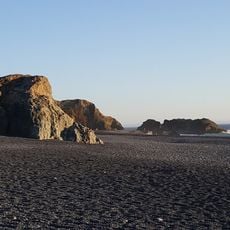
Access is either a short hike from the end of a 4WD road or a slightly longer walk south along the beach from the camping area at the mouth of the Mattole River. The station is remote, so carry water and allow daylight for the return.
Old Bill was a Coast Guard career horse who served Punta Gorda for thirty years as saddle, pack and buggy horse, until the station closed in 1951. For most of the light's operating years access was by horse, or by horse-drawn wagon in good weather, so the station's supplies arrived on his back.
The community of curious travelers
AroundUs brings together thousands of curated places, local tips, and hidden gems, enriched daily by 94,575 contributors worldwide.