Mount Silverthrone, Mountain summit in British Columbia, Canada.
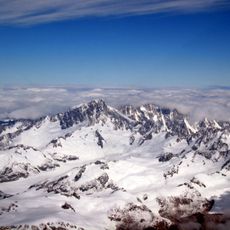
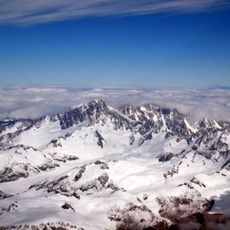
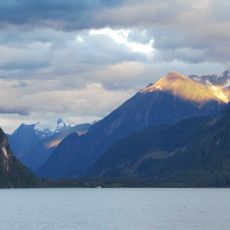
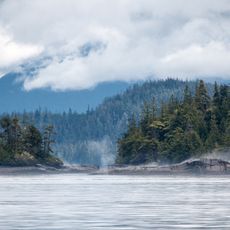
Mount Silverthrone is a mountain summit in the Coast Mountains of British Columbia rising to 2865 meters (9400 feet). The peak sits at the northeast edge of the Silverthrone Caldera and is composed of rhyolite rock.
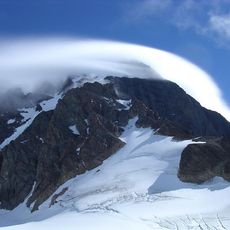
The first recorded ascent was made on April 12, 1945, by Norman Bright and Frank P. Foster. The mountain lies in the Silverthrone Caldera, whose eruptions were most frequent between 500,000 and 100,000 years ago, with younger basaltic andesite lava domes and cones still considered active. Its summit area stays permanently covered in ice and snow, so the exact highest rock point has never been fixed.
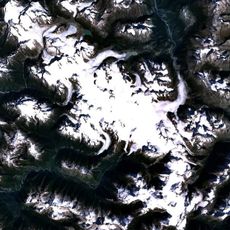
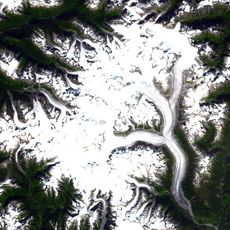
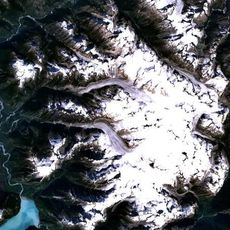
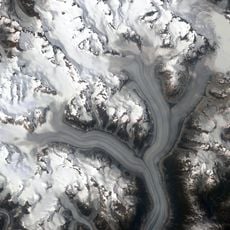
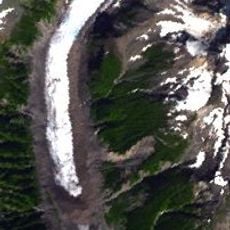
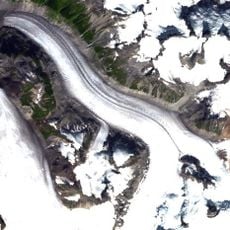
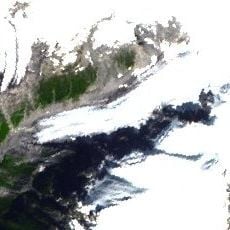
The name Silverthrone, meaning "silver throne", likely comes from the sight of the large icefield covering the mountain. The official name is Silverthrone Mountain, though Mount Silverthrone is also common; a peak in the Alaska Range carries the same name. The Ha-Iltzuk Icefield around it is the largest in the Coast Mountains south of the Alaska Panhandle.
The summit lies in the Silverthrone Caldera, about 70 km west of Mount Waddington, surrounded by the Ha-Iltzuk Icefield. Access is by air; the nearest road is far away. May and June offer the most favorable weather. Expect extreme mountain conditions, glacier crossings, and long access times.
The summit area stays permanently covered in ice and snow, so the exact position of its highest rock point has never been determined. Height figures range from 2,865 m on most topographic maps to 3,160 m, which would make it Canada's highest volcano. Its 975 m of prominence is the greatest in southwestern British Columbia.
The community of curious travelers
AroundUs brings together thousands of curated places, local tips, and hidden gems, enriched daily by 94,560 contributors worldwide.