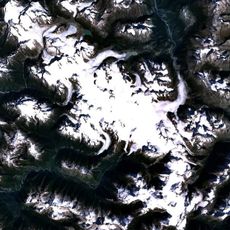
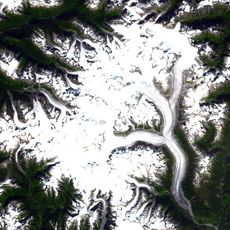
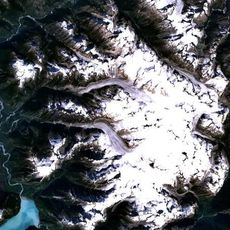
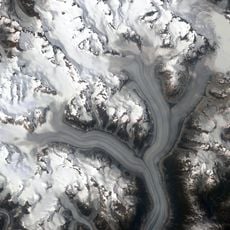
Mount Waddington, Mountain summit in Coast Range, British Columbia, Canada.
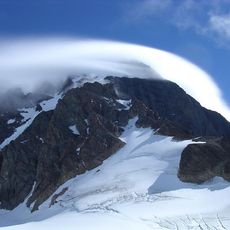
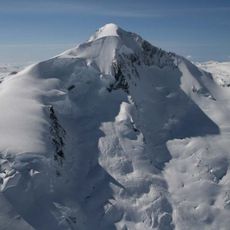
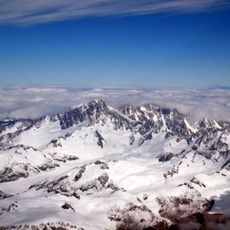
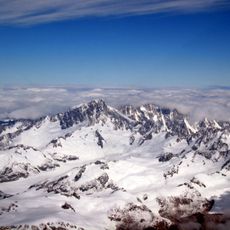
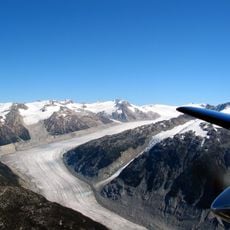
Mount Waddington is the highest peak entirely within British Columbia, reaching 4,019 m in the Coast Mountains. Its summit is a dark grey rock crest with steep, jagged faces and deep gullies, while broad snowfields and glaciers cover the flanks below. The mountain rises about 32 km from sea level at the heads of Bute and Knight Inlets.
Fritz Wiessner and William House achieved the first recorded ascent in 1936 after numerous failed attempts by earlier parties. The mountain had remained unknown to mountaineers for decades before this successful expedition revealed its location and possibility of being climbed.
The Mundays called it "The Mystery Mountain" after spotting a nameless peak from Mount Arrowsmith in 1925. The Geographical Names Board of Canada named it after Alfred Waddington, promoter of a road and railway through the Homathko valley and Bute Inlet. The Mount Waddington Regional District also bears the name.
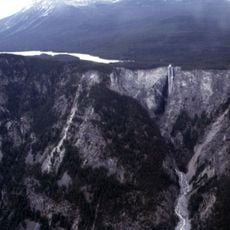
The mountain lies in the Waddington Range, about 32 km from sea level at the heads of Bute and Knight Inlets. Approach is typically by floatplane or helicopter to the Dais or Franklin Glaciers; the first ascent party ferried loads for twelve days from Knight Inlet. The Homathko and Klinaklini gorges make overland access difficult.
Mount Waddington was first climbed on 20 July 1936, when Fritz Wiessner and Bill House reached the summit after a 13-hour push from their base camp on the Dais Glacier. Wiessner changed from boots to rope-soled shoes for the final 300 m of the south face and handed his ice axe to House. The second ascent only came in 1942, along the same Wiessner route.
The community of curious travelers
AroundUs brings together thousands of curated places, local tips, and hidden gems, enriched daily by 93,770 contributors worldwide.