Morden Colliery Historic Provincial Park, Coal mining historic site in Regional District of Nanaimo, Canada.
Morden Colliery Historic Provincial Park is a 4-hectare historic provincial park near the east coast of southern Vancouver Island, British Columbia. Its main feature is a 22.7-metre-high concrete headframe and tipple, built around 1913, with ruins of outbuildings, a steam plant and a blacksmith shop, plus a trail along the former railway right-of-way toward the Nanaimo River.
Work on the Morden shafts began in 1912, but the coal seam was only reached a year later; a yearlong strike in 1913–1914 flooded the new shafts, and the 22.7-metre concrete headframe was built during this period. Production started in 1917, and the pit closed in 1921, with the Pacific Coast Coal Mining Co. bankrupt the following year. The Canadian Coal and Iron Co. rehabilitated the mine in 1930 but closed it the same year.
The site reflects the importance of coal mining to Vancouver Island, where thousands worked in this industry during a long period. The remaining structures show how central this work was to the region's development.
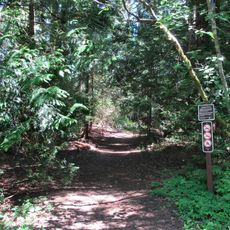
The day-use park lies off BC Highway 19, about 10 km south of Nanaimo, with Highway 1 to the west and the Nanaimo River to the southeast. A trail follows the former Pacific Coast Coal Mining railway right-of-way eastward toward the Nanaimo River, with interpretive plaques along the route. The concrete headframe stands behind a chain-link fence.
The 22.7-metre concrete headframe and tipple, built around 1913, is one of only two concrete headframes still standing in North America; the other is in Muddy, Illinois. In 2019 the Friends of Morden Mine secured a $1.4-million provincial grant and stabilized it using 16 shipping containers, a technique borrowed from Christchurch earthquake work.
The community of curious travelers
AroundUs brings together thousands of curated places, local tips, and hidden gems, enriched daily by 94,468 contributors worldwide.