Winona meteorite, Stone meteorite site near Winona, Arizona, United States
The Winona meteorite is a stone meteorite discovered near Winona, Arizona, characterized by a composition that includes enstatite, olivine, meteoric iron, plagioclase, and troilite. This mineral combination classifies it as a primitive achondrite, making it scientifically significant for understanding early solar system materials.
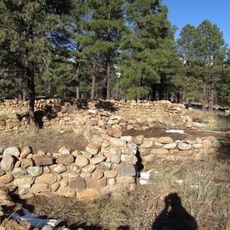
The meteorite was discovered in September 1928 during an archaeological excavation at the Sinagua settlement of Elden Pueblo in Arizona, where it lay buried in a stone container. This unusual finding changed the course of both archaeological and meteorite research in the region.
The meteorite fragments were carefully placed inside a stone burial cist at an ancient pueblo settlement, suggesting they held sacred or valuable meaning for the people living there. This intentional placement reveals how some sky objects became woven into the spiritual practices of the region's inhabitants.
Fragments of the meteorite can be viewed at the Museum of Northern Arizona in Flagstaff, where they are displayed under controlled conditions. Visitors should check the museum's hours and access policies before planning a visit to see the specimens.
This meteorite serves as the defining example for the winonaite classification, with its mineral structure showing the specific traits that identify this rare meteorite group. Its discovery uniquely bridged two scientific fields when archaeologists and meteorite researchers came together over a single find.
The community of curious travelers
AroundUs brings together thousands of curated places, local tips, and hidden gems, enriched daily by 60,000 contributors worldwide.