Meteor Crater, Impact crater in Coconino County, Arizona, United States.
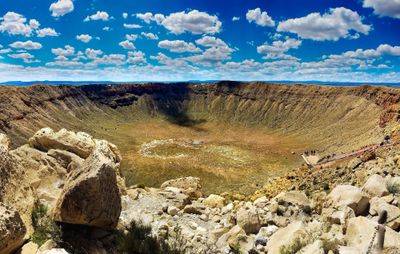
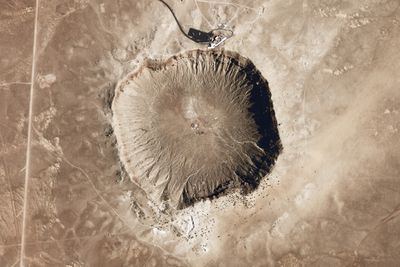
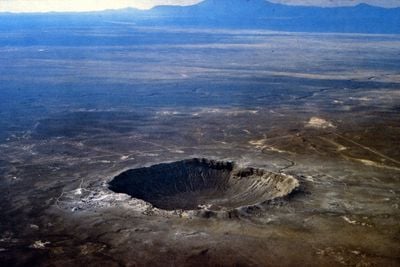
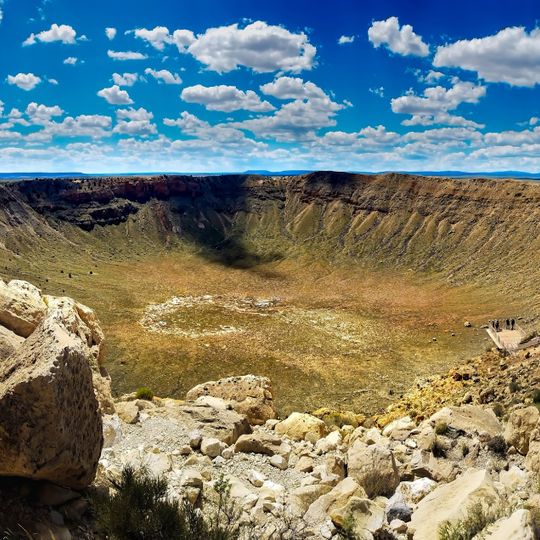
Meteor Crater is a near-circular depression in northeastern Arizona that spans roughly 1.2 kilometers (three quarters of a mile) across and drops about 170 meters (550 feet) at its deepest point. The rim rises roughly 45 meters (150 feet) above the surrounding desert floor, forming a raised wall of fractured rock visible from a distance.
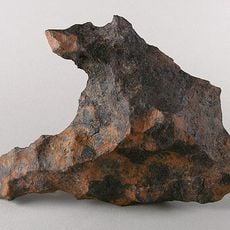
The depression formed roughly 50,000 years ago when an iron meteorite about 50 meters (160 feet) wide struck the ground at tremendous speed. For many years, scientists believed the formation was an extinct volcano until an engineer in the early 1900s discovered fragments of meteorite scattered around the area and proved its true origin.
Visitors often arrive with a sense of wonder about Earth's relationship with the solar system, treating the site as a place where ordinary people can grasp the scale of cosmic events. Local families and science enthusiasts from around the country return regularly, drawn by the tangible connection to forces beyond our planet.
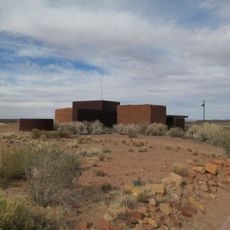
A visitor center near the rim offers exhibits on meteorites and space exploration, while guided walks along the edge help visitors understand the scale of the impact. Those exploring the rim should wear sturdy shoes, as the terrain is uneven and the desert sun can be intense throughout the day.
The force of the impact threw millions of tons of rock into the air, scattering fragments across a wide area far beyond the rim itself. Astronauts from the Apollo program trained here during the 1960s because the landscape resembles the surface of the moon.
The community of curious travelers
AroundUs brings together thousands of curated places, local tips, and hidden gems, enriched daily by 90,871 contributors worldwide.