Canyon Diablo meteorite, Iron meteorite site in Coconino County, Arizona
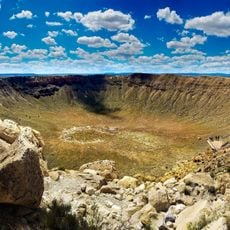
The Canyon Diablo meteorite is the name given to the many fragments of the roughly 50 m (160 ft) asteroid that struck Arizona about 50,000 years ago and formed Meteor Crater, also called Barringer Crater. The fragments are iron octahedrites, dark grey to near-black with rust-orange and reddish-brown patches, and the largest ever found, the Holsinger Meteorite, weighs 639 kilograms (1,409 lb).
The fragments were named in 1891 for the Canyon Diablo post office, about 2.5 miles west of Meteor Crater. The crater's origin was debated from the late 19th century until the early 1930s, when work by Daniel M. Barringer, F. R. Moulton and Harvey Harlow Nininger settled the impact question. In 1953 Clair Cameron Patterson measured lead isotopes in these samples and dated the Earth at 4.550 billion years, give or take 70 million.
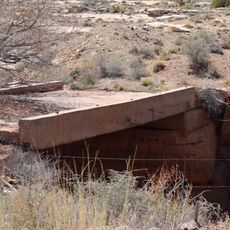
The name Canyon Diablo was given in 1891 by convention for the nearest post office, not for the crater itself; the actual canyon lies about 2.5 miles west of the crater, in the westernmost part of the strewn field. Prehistoric Native Americans knew and used the iron fragments long before scientists began collecting them in the 19th century.
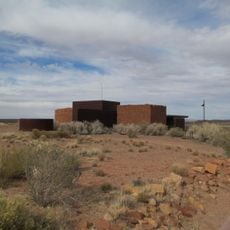
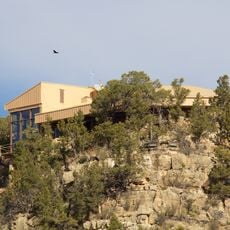
The 639 kg Holsinger Meteorite, the largest fragment ever found, is displayed at the Meteor Crater Visitor Center on the crater rim. The crater lies off Interstate 40 east of Flagstaff, and the surrounding rim area is where most fragments were picked up. Expect open, windy high-desert ground; the crater itself is viewed from the rim, not descended into.
The troilite in Canyon Diablo samples is the international reference standard for sulfur isotope ratios. The meteorite also yielded the first discoveries of lonsdaleite, moissanite, haxonite and krinovite, and some specimens carry troilite-graphite nodules with small diamonds.
The community of curious travelers
AroundUs brings together thousands of curated places, local tips, and hidden gems, enriched daily by 93,231 contributors worldwide.