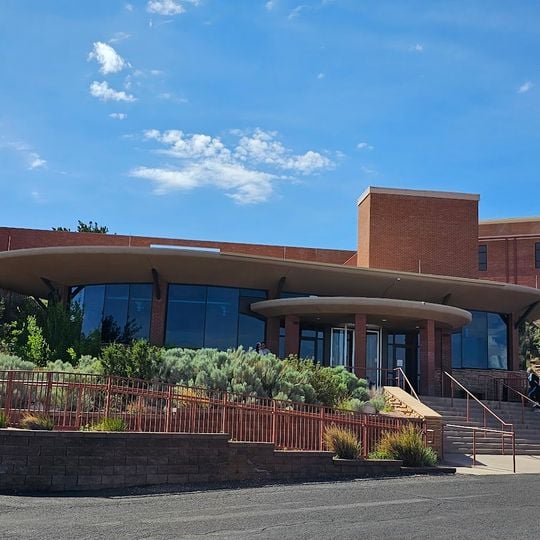
Meteor Crater Visitor Center, Visitor center and museum at Meteor Crater, Arizona, US
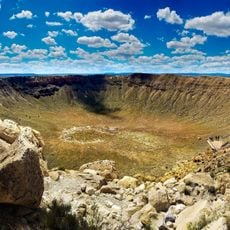
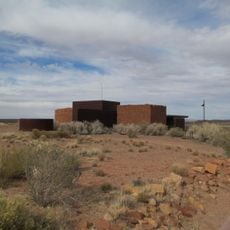
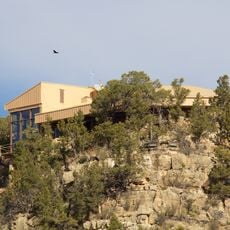
Meteor Crater Visitor Center stands near the rim of Meteor Crater, a bowl about 1.2 km across and some 170 m deep in the flat grassland east of Flagstaff. The building holds indoor exhibits on impact science and a theater, while outdoor viewing platforms look onto the crater walls and the raised rim. The site is on private land operated as a tourist attraction.
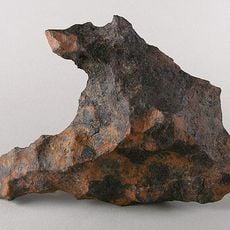
Meteor Crater formed about 50,000 years ago when a nickel-iron meteorite roughly 50 meters across struck the Colorado Plateau. Mining engineer Daniel Moreau Barringer bought the site in 1903 to prove an impact origin and drilled there for decades. NASA later used the crater to train Apollo astronauts, and the visitor center displays a fragment of the Canyon Diablo meteorite.
The site is named for Meteor Crater, the impact feature it overlooks, and the surrounding land is part of a working cattle ranch. The center's exhibits and film present the crater as a place of ongoing scientific study rather than a spectacle, and visitors can see the layered rock of the rim from the observation windows.
The visitor center sits on the crater's north rim off Interstate 40, about 6 miles south of exit 233 via Meteor Crater Road. Guided rim walks led by staff cover a short stretch of the edge; independent hiking into the crater is not permitted. The site is exposed at roughly 1,700 m elevation, so carry water and sun protection.
The center displays a 1,406-pound (637 kg) fragment of the Canyon Diablo meteorite, the largest piece recovered from the crater. It was found in 1911 and is one of the largest meteorites ever recovered in the United States.
The community of curious travelers
AroundUs brings together thousands of curated places, local tips, and hidden gems, enriched daily by 93,196 contributors worldwide.