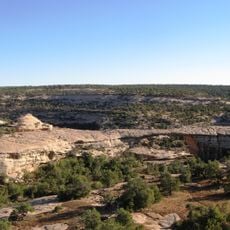
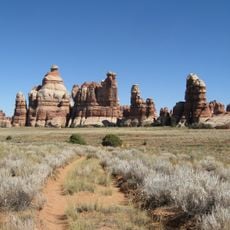
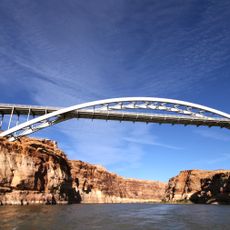
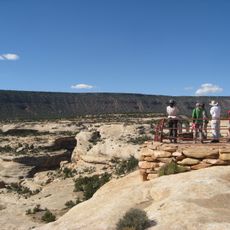
Cataract Canyon, River canyon in Canyonlands National Park, United States.
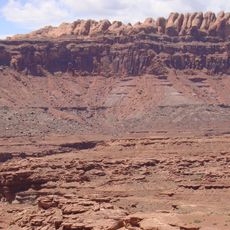
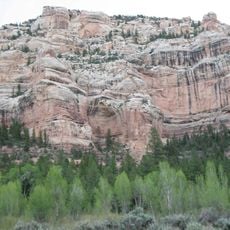
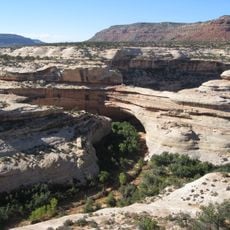
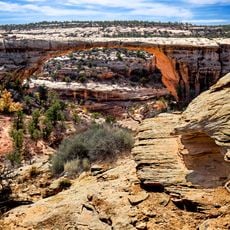
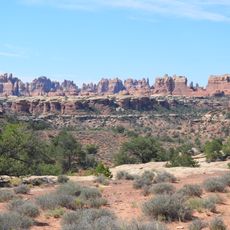
Cataract Canyon is a 46-mile (74 km) canyon of the Colorado River in Canyonlands National Park and Glen Canyon National Recreation Area, southern Utah. It runs from the Green River confluence to the Dirty Devil River confluence. Its lower half lies under Lake Powell at the lake's normal high-water elevation of 3,700 feet (1,100 m). The oldest rock layer visible is the Paradox Formation, deposited about 320 million years ago.
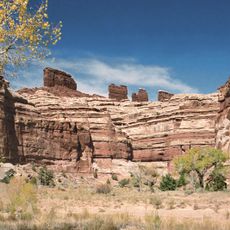
The canyon's oldest exposed layer is the Paradox Formation, deposited about 320 million years ago. Around 70 to 80 million years ago the Laramide orogeny lifted the Colorado Plateau, and the river then cut through the rock. The first recorded European visitor was fur trapper Denis Julien in 1836; John Wesley Powell's 1869 expedition named the canyon for its rapids.
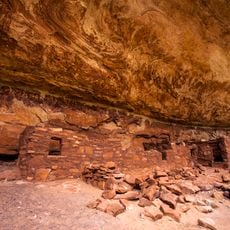
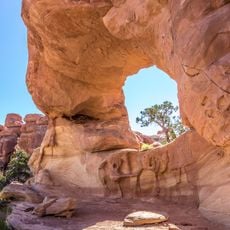
The canyon's rock art and ruins are at least 800 years old and are attributed to the Fremont culture, which lived in the Canyonlands area roughly from 700 to 1300 CE, alongside the Ancestral Puebloans. The name comes from John Wesley Powell, whose 1869 expedition found the rapids so hard that the boats were portaged around every one of them.
Access is primarily by river with a boat, and permits are necessary before any journey can begin. Visitors should prepare for demanding water conditions and understand that traveling through this canyon requires physical capability and experience.
The canyon's name comes from John Wesley Powell, the one-armed Civil War veteran whose 1869 expedition portaged around every rapid here; the difficulties led him to call it Cataract Canyon. His wooden boats had launched near Green River, Wyoming, and continued through Glen Canyon and the Grand Canyon to the mouth of the Virgin River.
The community of curious travelers
AroundUs brings together thousands of curated places, local tips, and hidden gems, enriched daily by 93,184 contributors worldwide.