Bandelier National Monument, Archaeological site in Los Alamos and Sandoval Counties, United States.
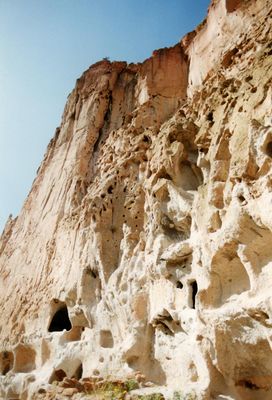
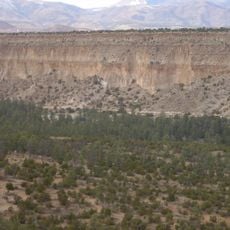
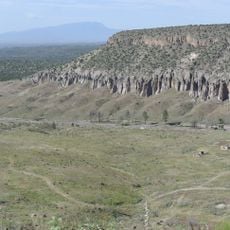
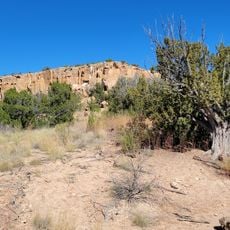
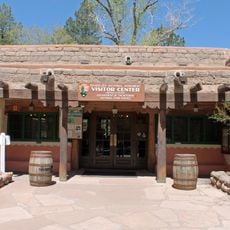
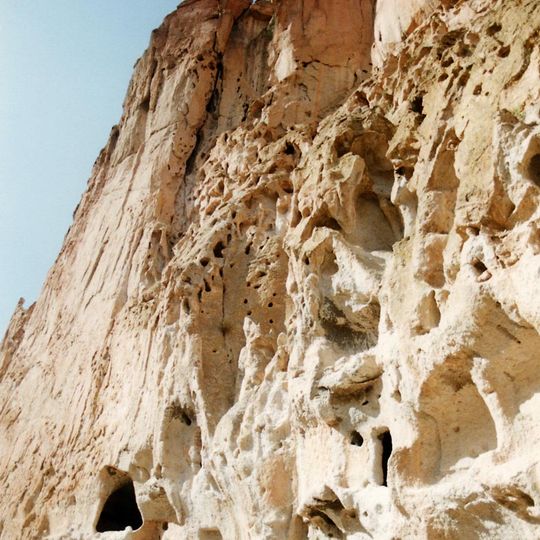
Bandelier National Monument protects a canyon of soft volcanic tuff, the Bandelier Tuff, laid down by an eruption of the Valles Caldera 1.14 million years ago. Ancestral Puebloans carved cavates into the cliff face and built stone pueblos on the canyon floor, including the circular Tyuonyi Pueblo, once one to three stories tall. A 1.2-mile paved Main Loop Trail from the visitor center passes these dwellings, and a side trail leads to Alcove House, a shelter cave with a reconstructed kiva reached by ladder.
The site preserves Ancestral Puebloan settlements from between 1150 and 1600. The monument was established in 1916 and named after anthropologist Adolph Bandelier, who studied the history of the place.
The monument takes its name from Adolph Bandelier, the Swiss-American anthropologist who visited in 1880 and wrote of the cliff dwellings, "It is the grandest thing I ever saw." His research supported the preservation campaign that led to the 1916 designation. The park is managed in cooperation with the surrounding Pueblos.
The main areas are reached by well-marked trails, some with ladders leading to elevated dwellings. Wear comfortable shoes as the paths are uneven and some spots require climbing.
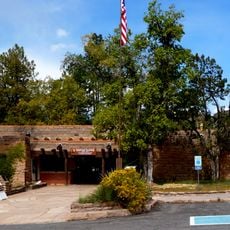
The monument's 31 buildings from the 1930s, built by Civilian Conservation Corps crews, form the largest unaltered group of CCC structures in a national park area and a National Historic Landmark District. They follow National Park Service Rustic principles, using local stone and timber.
The community of curious travelers
AroundUs brings together thousands of curated places, local tips, and hidden gems, enriched daily by 94,499 contributors worldwide.