Sierra Grande, Mountain summit in New Mexico, US
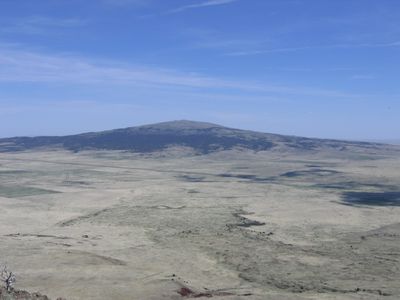
Sierra Grande is a mountain summit in northeastern New Mexico, rising to about 11,100 feet (3,380 m) above sea level. Its top is notably flat, and because it rises alone from the surrounding grassland, its shape stands out clearly from far away.
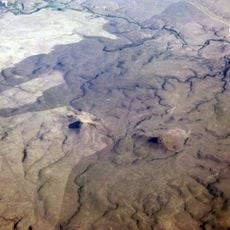
Sierra Grande is an extinct stratovolcano in the Raton-Clayton volcanic field, the largest volcano in that field. Its andesite flows range in age from 3.8 to 2.6 million years, and the cone rises about 2,200 feet above the surrounding plain. The rock is largely two-pyroxene andesite, a type found almost nowhere else in the field.
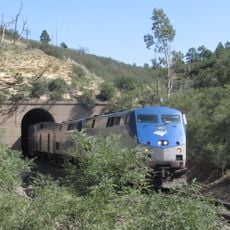
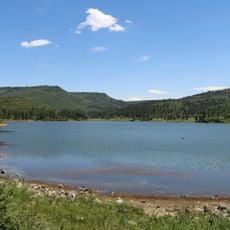
Sierra Grande rises above the Dry Cimarron valley near Des Moines, where U.S. Highways 64 and 87 and the Colorado and Southern Railway pass along its northern and eastern flanks. Pinabete Creek, Seneca Creek and the North and South Branches of Corrumpa Creek begin on its slopes, feeding the Dry Cimarron and Corrumpa Creek at Weatherly Lake.
The route crosses open terrain with little shade, so sturdy footwear and enough water are a must. Setting off in the morning is a good idea because afternoon thunderstorms are common in this part of New Mexico.
Sierra Grande is a stratovolcano, not a shield volcano, and the largest volcano in the Raton-Clayton volcanic field. Its eastern slopes are the easternmost point in the United States above 8,000 feet, and the peak is the highest in the country east of 104 degrees west. It can be seen from Texline, Texas, and from the summits of the Culebra Range in Colorado.
The community of curious travelers
AroundUs brings together thousands of curated places, local tips, and hidden gems, enriched daily by 94,043 contributors worldwide.